Month 7:15, Week 2:7, Year Days 191
2Exodus 13/40
Gregorian Calendar: Friday 25 September 2026
Sukkot 2026 I
Life's Journey &
Final Consummation
Introduction
Chag Sukkot sameach kol beit Yisra'el and Mishpachah - welcome to the first day of the Feast of Tabernacles for the current, turbulent year of 2026! With the world madly rushing towards World War 3, let us turn aside from the madness not only of world happenings but also the terrible suffering occasioned by the worldwide persecution of Christians and all the sickness currently consuming us, and instead let us turn to this the seventh and last of the annual festivals of Messianic Israel as well as the third and last of the Pilgrim Festivals.
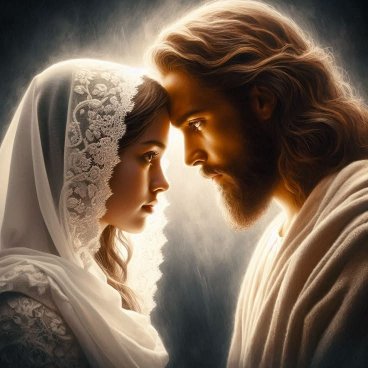
A Heavenly Wedding
Today is a heavenly Wedding-to-be Celebration which may seem out of place to many in the thick of war in the Ukraine and the Middle East, or in the thick of persecution such as in Nigeria as the Religion of Violence butchers its way into its satanic paradise, or as many are battling with deadly illnesses. I say this not as one who has fought in a war but as someone who knows the pain of persecution and who knows the bitterness of deadly illness. Yet I can remember my parents, who lived through the horrors Second World War, telling me how how they celebrated happy moments in the midst of that such as weddings and new births. And since this is the season of an anticipated Grand Consummate Wedding, that is what I want to talk about today.
Tanakh Books Associated with the Pilgrim Feasts - A. Pesach
One thing I have never done before is share with you which of the Tanakh or Old Testament books is associated with the annual festivals. The Pesach or Passover Season, for instance, is traditionally associated with the Song of Songs or Shir haShirim. Toward the end of the spring cycle of divine moedim or appointments it is read out aloud on the intermediate sabbath or in its final days. This scroll is Israel's epic love-poem between a Bridegroom (Solomon) and his new Bride (the Shulamite woman), depicting a passionate romance as a metaphor of the covenant relationship between Yahweh (the Groom) and Israel (the Bride). Why is it associated with Passover? Because this was the historic moment that our Heavenly Father rescued and - this is the key reason for the association - trusted Himself to the Israelite people. And although Yahweh is omniscient (all-knowing), He took a big risk for He knew the ups and downs there would be in this relationship. But He loved Israel - and by extension, the Messianic Community (Church) that was to come, and the whole of humanity - so much that He chose to love her in spite of all the pain she would bring him because of unfaithfulness. And as we all know, the Exodus, in spite of the euphoria of gaining freedom from Egyptian slavery, was a challenging and painful event too, with trials and tribulations of many sorts. The 40 year purging process was tough...very tough. And the point is this: all marriages go through their challenging moments. It isn't necessarily a primrose path.
The Spring Marriage Theme Repeats in the Autumn
The Passover Season was in the spring. Now move forward to the autumn or fall which we are in the midst of now and once again thre marriage theme repeats itself. Indeed, it has never been absent because the whole of life is intimately tied with marriage. But now we find ourselves, not in the season of old age as you might expect of an autumn season festival as winter looms, but actually we are still at the beginning of the marriage business, and specifically its third phase. If the Passover Season was the Dedication of Engagement phase of a potential, hoped-for marriage; and if the Festival of Shavu'ot or Weeks ('Pentecost') was the ordinance of betrothal (the Torah being the betrothal contract or ketubah issued and agreed to at Mount Sinai), then Sukkot or Tabernacles is the actual day of full marriage and the seven-week long days we begin today is actually the honeymoon! People don't realise that all the annual festivals, except the eighth one called Shemini Atseret (the Last Great Day), actually represents the rest of marriage which then moves through a period of no annual festivals until the cycle repeats at Pesach. And Shemini Atseret, as you know, depicts the Millennium of Peace and Joy which is what full marriage is supposed to be if the couple live up to their covenants. For this is, above all, Covenant Marriage, just like our covenant relationship with Christ that begins with salvation but immediate proceeds into covenant faithfuless in which the Bridegroom (Christ, the Husband) promises to love and provide for His Bridegroom (us) and she, in turns, covenants to be fully obedient to Him.
Tanakah Books Associated with the Pilgrim Feasts - B. Shavu'ot
The second phase of marriage - betrothal - which takes place at Shavu'ot (Weeks) in the summer - celebrates what traditionally is known as Z'man Mattan Toratenu - the anniversary of Yahweh giving the Torah to the Israelites on Mounta Sinai. Which Old Testament book, you may ask, is commonly associated with Shavu'ot or Betrothal? The answer is the Book of Ruth. Why? Because of Ruth's volunatry acceptance of the Elohim (God) of Israel in that famous quotation, "Your people shall be my people, and your Elohim (God) shall be my Elohim (God)" (Ruth 1:16) which is rightly seen as a re-enactment of the Israelite people - the Bride - willingly accepting the Betrothal Covenant given at Sinai. You know, that verse is typically viewed by Christians as a very emotional scene in which Ruth demonstrates her loyalty to Naomi, her mother-in-law, but it's actually much, much more than that: it's a conversion, a salvation event, in which Ruth forsakes the gods of Moab at the River Jordan and accepts the Eternal Elohim (God) of Israel - Yahweh - as Her Master and Deliverer (Lord and Saviour). That makes, I hope you'll agree, the Shavu'ot Moment all the more special.
Shavu'ot, the Feast of Loving-Kindness & Mercy
Shavu'ot (Weeks) is very much the Festival of Chesed or Loving-Kindness - it is spiritual marriage, at least for humans. It stands between Pesach and Sukkot (today) and is the time that the the betrothed couple get to know each other without physically cosummating the marriage, which is the business of Sukkot. This is the time they learn to serve Yahweh's Kingdom together as Christians, ensuring that the proper marriage foundation of spirituality is laid down before they move together in their new home, taste the pleasures of physical intimacy, and raise a family. At this time they traditionally learn to take care of the vulnerable according to the mitzvot (commandments) of the Torah. Shavu'ot, you'll also remember, is when the communal covenants begin and the newly betrothed learn to take care of their brothers and sisters, demonstrating mercy toward them in the same way Yahweh demonstrates to us. The story of Ruth is in so many ways a masterclass in chesed, showing how the kindness of a foreign convert (Ruth) and a righteous Israelite landowner (Boaz) ultimately leads to King David and to the Messianic lineage.
Tanakah Books Associated with the Pilgrim Feasts - C. Sukkot
Which brings us to today - to Sukkot, the Feast of Tabernacles, and I think you're going to be surprised by the book with which it is traditionally most associated. Would anyone like to hazzard a guess? [...] It is actually associated to the most unlikely book of all, to Kohelet, which means 'the Preacher', better known to us as Ecclesiastes. Are you surprised? Let me tell you why. The answer may be found in two words: once the passion of week-long love-making is over, and the celebrations are over and the guests return home, there somes a reality check. You heard me right. Because its after the honeymoon is over, the couple start learning whether they used their betrothal time between Shavu'ot and Sukkot wisely or not. It's the time they discover whether they really have understood the community implications of the Summer and Autumn festivals.
The Reality Check After Celebration
This is, I think, an important point to underline. Ecclesiastes, which I often share with atheist friends I am witnessing to, serves as a philisosophical counterbalance, and famously declares, "Vanity of vanites, all is vanity" (Eccl.1:2, KJV, NRSV) or "everything is meaningless" (NIV) or "emptiness" (NEB), "futility" (ISRV), "vaporous" (AmpV), in short, things of no worth. This is to remind us not to place our ultimate security in physical wealth or temporal successs. After the marriage, celebrations, the bride and bridegroom must get stuck into the nitty-gritty of life. That's the first association we make in Ecclesiastes.
The Fragility of the Sukkah
The second concerns the sukkot, tabernacles, booths or shelters themselves. Here in Sweden we use a prefabricated sukkah as it's no longer possible to build one with actual botanical material, but in climates where that is possible, you end up with really quite a fragile structure. These were temporary huts, not standard nomadic called ohel tents for travel. They were constructed of loosely placed vegetation, tree branches, and reeds obtained locally, and were then dismantled and abandoned afterwards. There's nothing elaborate about them. They weren't designed to be rain-proof because this was the arid desert where there was little or no rainfall, though at certain locations in their journey they would have encountered rain in certain elevated or northern zones between October and April. The roof was traditionally kept sparse enough to see the starlight through the branches. When the Israelites constructed them in the wilderness, they weren't putting roots down in the land. If the encampments were for longer periods of time because of the seasons (like over-wintering), then the booths would likely have been sturdier to last longer.
A Makeshift Desert Trek
The Bible account does make it clear, though, that these sukkot shelters were makeshift structures and were herefore fragile. It's the fragility of these makeshift shelters that is in view here, reminding married couples that physical reality mirrors the central theme of Ecclesiastes - everything material is fleeting, temporary, including our mortal physical bodies. When the Israelites moved to their next encampment, they would have abandoned their original building materials and constructed new booths whenever they settled at a new station or oasis along the trek. Similarly, husbands and wives are constantly having to make adjustments and adaptations according to happenstance or unexpected circumstances as, for example, with the arrival of a new child, sudden unemployment, or taking care of sick parents. Life, and married life in particular, is not therefore therefore unlike the Sinai trek.
A Call to Joy
The third and final association with this book written by Solomon is this: despite its somber reputation. Ecclesiastes does repeatedly conclude that humanity's best option is to fear Yahweh and enjoy the simple pleasures of life - namely, eating, drinking, and being merry. And this, I think you'll agree, perfectly aligns with Sukkot, which is explicitly commanded by Yahweh in the Torah to be a time of Z'man Simchatenu - intense rejoicing, just as in a wedding celebration! And that's what I want us all to do n spite of war, persecution and sickness, something that can only be done by the spiritually regenerated. Why is this so important? Because we need simchah (joy) for health and well-being, especially in times of war. We are commanded to be joyful even if we are experiencing terrible times, so that we are not dragged down into the pit of despondency. If we are in Christ, as we are if we have been born again, then we can spontaneously rejoice in Him whilst not denying or minimising the reality of our external sufferingts.
Sukkot & the Final Autumn Harvest
Sukkot occurs during the final autumn harvest, a time of peak material abundance and joy. That's why it is also called the Feast of Ingathering. It's Israel's harvest festival. This is why it is the time that full marriage takes place allegorically between Christ the Bridegroom and the First Resurrection Qodeshim (saints, set-apart ones). Thus it is written in the Book of Revelation:
"'Let us rejoice and be glad and give Him glory! For the wedding (marriage) of the Lamb has come, and His bride has made herself ready. Fine linen, bright and clean, was given her to wear.' (Fine linen stands for the righteous acts of the qodeshim/saints, set-apart ones.)
"Then the malak (angel) said to me (John), 'Write: 'Blessed are those who are invited to the wedding (marriage) supper of the Lamb!'" And he added, 'These are the true words of Elohim (God)''" (Rev.19:7-9, NIV).
Living in Hopeful Anticipation
This is the event that all true believers look foreard to, described here in highly symbolic language. Notice that the wedding garments - the robes, "bright and clean" - represent our works or deeds on earth which are specific to this First Resurrection event that takes place at the beginning of the Millennium, marked by the moed of Shemini Atseret. Our deeds, whilst they don't save us, do absolutely matter and are credited to us as rewards for our obedience at the very end. As such then, the final salvation we receive - not the one we are walking in now and will continue to walk in until we die or are transformed at Christ's coming - includes our works here represented as fine linen robes.
Conclusion
Yahweh willing, and health permitting, I will manage one more Sukkot talk and possibly one at Shemini Atseret. So until the next assembly, Yahweh bless you and keep you in Yah'shua's (Jesus') Name. Amen.
 V510
V510

|