Month 7:09, Week 2:1, Year Days 185
2Exodus 13/40
Gregorian Calendar: Saturday 19 September 2026
Yom haKippurim 2026
Our Shabbaton Sabbath of Complete Rest
Introduction
Chag Yom haKippurim sameach and Shabbat-Shabbaton Shalom kol beit Yisra'el and Mishpachah. Welcome to the sixth annual moed or appointment of our Heavenly Father. Whereas all the others may justifiably be called 'feast days' this one is clearly not one. We do not feast on it but rather fast. We do not celebrate anything on it but rather fear it, or ought to as the ancient Israelites did. Critically, most misname it, calling it Yom Kippur or the singular 'Day of Atonement, when it's proper name is Yom haKippurim, meaning 'Day of Atonements' in the plural, all five of them. And finally, its correct form is often confused with the second annual moed in the spring called Yom haBikkurim or the 'Day of Firstfruits' because they sound alike. And as a footnote, instead of beginning at sunrise like the other moedim and ending at sunrise the following day, it begins at the sunset of one day and ends at the sunset of the next day. So it consists of two part calendar days. So this is a very different kind of moed from all the rest. As such, then it makes me feel uneasy, as I suspect it's meant to.
The Perpetual Commandment
We're not told on which of the two part-days we are to assemble. Traditionally, we have always gáthered on the second part-day but this year I felt we should assemble right after it starts. And that's why we're here this evening, after sunset, breaking with tradition. So let's find out what Father actually wants us to do and why it is we are to do somehing most unusual - what some translations call 'afflicting ourselves'. Turn with me to chapter 16 of Leviticus, beginning at verse 29:
"This shall be a chuk (statute) le-olam-va-ed (forever) for you: In the seventh month, on the tenth day of the month, you shall afflict your beings (souls), and do no work at all, whether a native of your own country or a stranger who dwells among you. For on that day the cohen (priest) shall make keporah (atonement) for you, to cleanse you, that you may be clean from all your sins before Yahweh. It is a shabbat (sabbath) of solemn rest (a Shabbat-Shabbatom) for you, and you shall afflict your beings (souls). It is a chuk (statute) le-olam-va-ed (forever). And the cohen (priest), who is anointed and consecrated to minister as cohen (priest) in his father's place, shall make atonement, and put on the linen clothes, the qadosh (holy, set-apart) garments; then he shall make atonement for the Holy Sanctuary, and he shall make keporah (atonement) for the tabernacle of meeting and for the altar, and he shall make keporah (atonement) for the cohenim (priests) and for all the people of the assembly (congregation). This shall be an everlasting chuk (statute) for you, to make keporah (atonement) for the children of Israel, for all their sins, once a year" (Lev.16:29-34, NKJV).
The Physical and Spiritual Meaning of Afflicting Our Souls
Though no scripture categorically states that this "affliction" is 'fasting' per se, and though there is an actual Hebrew word for fasting - tsuwn - which literally means 'to cover one's mouth' that means to cease eating, the nation of Israel has always assumed that physically, at least, the verb 'anah, which we commonly translate into English as 'afflict' or 'deny' means to fast. I think the reason Yahweh chose this word rather than tsuwn is because it carries the spiritual aspect better than tsuwm for 'anah can also mean to humble yourself, chasten yourself, or submit yourself. In a word, 'anah means to lower or prostate yourself before Yahweh in recognition of your sinfulness. So fasting is more of an outward expression of this lowering of self before the Almighty by denyting that which we crave the most because without it we ultimately die: food. And we must die to sin. We are here to humble ourselves before the Creator, to set aside all pretentiousness, all self-righteousness, all self-exaltation, arrogance, defiance, rebelliousness, etc..
A Collective Moed
This is not a feast - a celebration - and neither is it about us individually but rather as a family or nation. It's a collective, communal or corporate response of the whole Community of Messianic Israel, an admission that we have failed in spite of our best efforts. And speaking personally, this year I have never felt such a failure in all my life as Yahweh has laid bare my sins. I say this not to court pity (for I want none but as a genuine recognition that I have not lived up to the perfection demanded of me by Christ who said to His talmidim (disciples):
"Be ye therefore perfect, even as your Father which is in heaven is perfect" (Matt.5:48, KJV).
Understanding the Call to Be a Perfect Human Being
This does not mean, incidentally, what at first you might at first think. The Aramaic word in this text can be rendered 'wholehearted' and the Greek translation, teleios, means something like 'complete', 'whole', 'fully mature', 'without fault' - taken together, a whole, complete, mature, wholehearted human being in the image of our Heavenly Father - a reflection of divine perfection in human terms. In other words, Yahweh wants us to be what we were designed to be - complete and fully human because sin dehumanises us. Having said that, though, I think we should keep using the English word 'perfect' lest we be tempted to minimise, reduce or compromise the importance of this commandment.
Works of Salvation or Works of Obedience?
What I don't want to do today is to get into a futile Protestant/Messianic debate as to whether this means we are to do nothing in recognition that our works can't save us (because we know they can't, and here we are utterly dependent on the work of Christ - His keporah or atonement for us on the cross) or whether it means we are to be fully Torah-obedient, other than to repeat what the late A.W.Tozer once preached:
"To escape the error of salvation by works we have fallen into the opposite error of salvation without obedience."
Instead of disputing with each other we shall simply say with the apostle James and Yah'shua (Jesus) Himself that "the body without the spirit is dead, so faith without works is dead also" (Jas.2:26, KJV) and "whoever does not obey the Son shall not see life" (Jn.3:36, KJV), remembering that the Son never did anything of His own will but only the will of the Father. And He was, no one can deny, Torah-obedient.
Silencing the Flesh to Hear the Spirit
It is clear, I believe, from the passage I have shared from Leviticus, that this 'affliction' we are commanded to voluntarily impose on ourselves has both a physical and a spiritual component, because the commandment is to afflict (or discomfort, if you prefer) our whole being. We do need to be careful of the modern English word 'soul' for if you ask the man on the street what a 'soul' is, I guarantee he will tell you it's the invisible, inner part of man. But that is not what the Bible means by a 'soul', and it isn't what the Hebrew text is saying here in chapter 16. Rather, the whole person or whole being is in view, the biblical 'soul' being body plus spirit. We are individually and collectively presenting ourselves before the Father as complete persons - physical and spiritual - and that means we are silencing the flesh through fasting and approaching the Throne of Grace with broken hearts and contrite spirits (Ps.51:17). We're here doing this today as a spiritual family in Christ. Not as individuals.
Five Atonements for All Israel
Our personal, individual submission to Yahweh we did (or should have done) on the very first annual festival of Pesach or Passover, the first of the three spring moedim for us as individuals. It's a good time to be reminded that 3/7ths of the festivals are about us as individuals, and 4/7ths about the community or nation of Israel. We're together still as individuals, of course, but the focus is 'us', not 'me' or 'you'. The sacrifice of the Passover Lamb, Yah'shua the Messiah (Jesus Christ) in the spring addressed the personal atonement by the Saviour for our sins - our individual spiritual cleansing, being washed clean by the blood of the Lamb through faith in His Name. The five atonements made at Yom haKippurim, the details of which I don't want to go into today, were made by Christ on Calvary too but collectively for the whole Body - the Bride - His collective allegorical wife. Whereas the Passover blood was for the individual members of Jacob's or Israel's family - himself, his four wives, his twelve sons and one daughter - the blood shed at Yom haKippurim - the Day of Atonements (notice it's in the plural) was for Jacob's - Israel's - whole family, all his descendants and those who are grafted into Israel through faith in Christ. There are two acts of atonement-in-one (actually more than two but like I said, let's keep this simple today).
A Day of Judgment
We often refer to Yom haKippurim as the 'Day of Judgment' too because judgment has to be made as to our worthiness for entry into the Kingdom - whether our faith is reflected in true obedience as Tozer reminded us - before final salvation and rewards can be finally dispensed. This is a judgment, moreover, not just of the Body of Christ or Messianic Israel but of the whole world - judgment for remaining on earth an judgment for explusion from it, for the final home of the righteous is the glorified earth. As I said, many things are going on at Yom haKippurim - many atonements are being made which you can learn more about on our Yom haKippurim websitse as I am much too ill to cover all that today and it's been covered in-depth before.
A Family Day of Getting Right With Yahweh
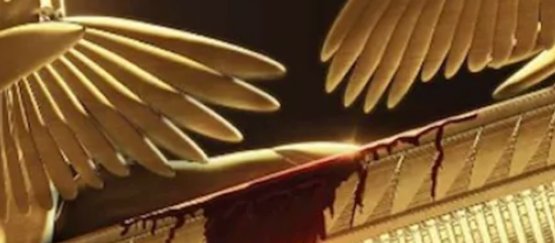
The previous festival we celebrated 8 days ago, Yom Teruah, signalled the triumphant Second Coming of Christ following terrible tribulation on the earth. In the Book of Revelation and in Isaiah He is depicted as wearing a blood-red robe trampling the grapes of Elohim's (God's) wrath against the deeds done by the evil of mankind (Rev.19:13; Is.63:2-3). Today will be the first Great Day of Judgment to decide who is to be resurrected in the First Resurrection - those who are alive on earth at His Second Advent plus all those lived before - to determine who may live on earth during the Millennium and who must remain as disembodied spirits in the spirit world before the Final Judgment of everyone else and the Second Resurrection. The purpose of the Final Yom haKippurim, which we prepare for every year on this day, is to decide who shall inherit the Kingdom, to what degree, and when [1]. Today is therefore a day of great importance for our eternal future, a day of soberness, not so much to determine today whether we have made it or not (for no man or woman knows until called before the Judgment Bar), but to persuade us to get deadly serious about our relationship with Yahweh through Yah'shua (Jesus) and to repent wholeheartedly as a a fellowship in Messiah - and to invite all other believers to join in with us. It's the Family Day of Yahweh's Children settling accounts with our Elohim (God).
Apologising for Failure
So I wish tonight, prior to the Neilah prayers tomorrow at the end of Yom haKippurim to make a public threefold repentance as (a) a husband and father, for having failed my family - wives and children (for like many of you, I have had failed marriages and relationships), (b) having failed the Body as a minister and pastor, and (c) having failed my Heavenly Father who has entrusted me with so much. I know only too well that a heavier judgment falls upon ministers and teachers of the Gospel especially those of us who have been entrusted with the welfare of souls as pastors. I mean this very sincerely, I am not being pretentious, nor am I trying to garner attention - this is what I feel deep down in my very being. I wish to be straight-forward and honest. I wish I could undo all the mistakes I have made over my lifetime and have a second try but I know that is impossible. My only hope is to be granted a little more time to make amends and put things right. We are next expected to do the impossible by our loving Father. What do I mean by that? I mean this: no man or woman can ever claim in the final analysis that they did not have ample opportunity to do what was right. We cannot make that excuse. And if we don't currently believe that now, we most definitely shall at the Final Judgment. I can only ask for your and Yahweh's forgiveness as this may very well be my last opportunity at Yom haKippurim. Who knows. No one does. We returns home when He calls us.
Judgment of the World
That a Judgment of the World at large is going on at present can scarcely be denied, and particularly a fierce judgment of the Western, formerly 'Christian' nations who have failed in their calling to be witnesses of Christ and rebelled against their Elohim (God). This is going to be a tough winter and an even tougher few years ahead so be prepared. Many idols are going to come crashing down and perhaps have already starting doing so, many false hopes will crumble - political idols like Zionism and 'Kingdom-Now' Neo-Conservatism, false doctrinal idols like the 'rapture' and prosperity teaching, the illusion of national greatness or superiority oevr other countries, and much else besides. The old empires are crumbling (including failed 'wannabe' empires like the EU) and one last, evil empire is arising that will finally end this present Æon or age. Those unrepentant élites who have been - and are being - defeated in their old empires are busily scrambling for new positions in the final Antichrist Order where they will meet their final destriction. The Penultimate Judgment has reached its climax. I don't need to say any more about that, do I? It's all over the news, however embedded in lies told by the legacy media.
The Importance of Shabbaton
I began this short sermon by wishing you peaceful Shabbat/Shabbaton. So I am going to end with that too and explain why the word 'Shabbaton' is used by many messianics. It comes from verse 31 of our text in Leviticus 16 which in most versions is translated simply as "a sabbath of complete (or solemn - NASB) rest" (NRSV) or something like that. This same term is to be found in all four Gospels (Mt.28:1; Mk.16:2; Lk.24:1; Jn.20:1) for the Resurrection of Yah'shua the Messiah (Jesus Christ) since there is no Greek word for 'shabbat'. Christ rose on the first of the seven weekly Shabbaton's between Firstfruits or Bikkurim (Aviv 16) and the Feast of Weeks or Shavu'ot ('Pentecost') 5 sabbaths and 50 days later. Finally, you will notice that Yom haKippurim and all the other annual festivals are 'le-olam-va-ed' or forever because they are continued in and by our Messiah, Yah'shua (Jesus), in the True Tabernacle or Temple, the one not pitched or made with human hands (2 Cor.5:1; Ac.17:24; 7:48; Heb.9:11), but the one which is in the Heavens and is returning with Christ in, and as, the New Jerusalem.
Conclusion
I shall end here as I am physicallý spent. I pray this will be a blesing to you in some small way, I'll see you tomorrow for the conclusion of this sacred moed. May Father Yahweh bless you and heal you and prosper you as you get right with Him on behalf of and together with the entire New Covenant Community of true, obedient, Christ-trusting believers, is my prayer in Yah'shua's (Jesus') Name. Amen.
Endnotes
[1] See the Universal Graded Salvation website.
 V509
V509

|