Month 2:29, Week 4:7, Year Days 059
2Exodus 13/40, Omer Count: Shabbat #6
Gregorian Calendar: Saturday 16 May 2026
The Stone, Stairway, House & Son
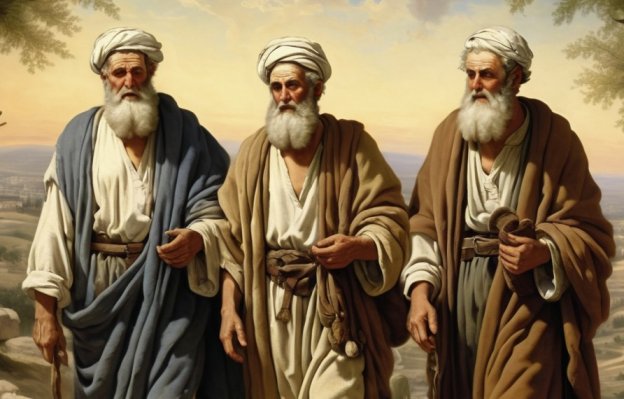
Part B3 - The Story of Jacob III
Continued from Part B2
Introduction
Shabbat shalom and welcome to the fourth and final part of this series on Nathanael and Jacob, this being the third part about Jacob. There is so much I want to share which I am going to try and condense to keep it as short as possible.
A. RECAP & BEING CAREFUL WITH TEACHERS
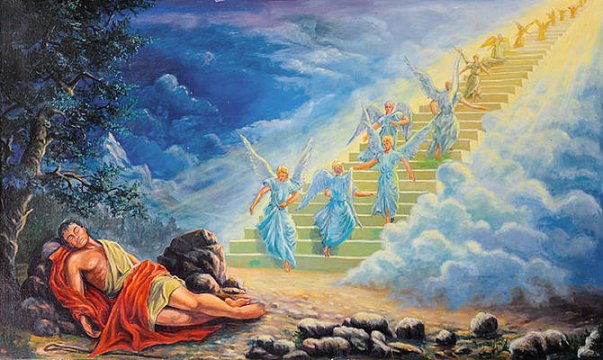
Last week I mostly focussed on yet one more prophetic meaning not just of the place where Jacob's famous Stairway or 'Ladder' dream took place but to show you how in Hebrew thinking a 'place' has at least two different layers, and here in particular, four, all of which had the same name:
- 1. The Canaanite settlement (village or town) of Luz itself;
- 2. The countryside or territory surrounding the settlement as a whole;
- 3. The particular spot in that countryside where Joseph made camp; and (the most important part because it identifies who the Messiah is),
- 4. The stone on which Jacob lay his head and had his prophetic dream.
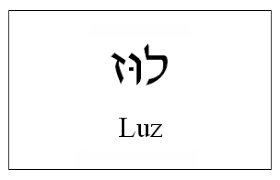
A Four-Layered Prophetic Meaning of Bethel/Luz
The meaning of each of these layers is very important to understand because all of them supply us with vital prophetic prophetic information. You will remember that the place was originally called Luz which Jacob renamed Bethel, which is our anglicised version of Beit or Bayyit El, meaning 'House of God', because here the young patriarch-to-be had, as far as we know, his first direct encounter with El Elyon, God Most High, Yahweh, our Heavenly Father, the Greater Yahweh. And though he probably didn't know it, he also encountered the Lesser Yahweh too, namely, the pre-incarnate Son of Yahweh, whose Name Yah'shua (Jesus) would not become known for a couple more Millennia yet. He was, until then, simply understood to be the Malak, Messenger or Angel or Yahweh's Presence, the only one of the Heavenly Host who could receive worship, the same malak (angel) whom Joshua (whose name also means Yah'shua or Jesus) encountered face-to-face just before the Battle of Jericho, He whom Paul called 'the spiritual rock' who had led Israel out of Egypt, across the Red Sea (Yam Suph/Sea of Reeds) and into the Sinai Peninsular, the same Yahweh whom Moses and the Elders of Israel met atop Mount Sinai to receive the Torah which He Himself would one day bring to completion ('fulfill') when, as the Saviour of Mankind, He incarnated into the world as the 'Elohim-' or God-Man'. And what Jacob realised at some level of consciousness or other, albeit very crudely, was that this 'Lesser Yahweh' was the symbolic 'stone' on which he had lain his head that connected earth with Heaven - with the Greater Yahweh above - our Father in Heaven - whom he saw standing at the top of the stairway. This prophetic dream would be one of the many important prophetic pointers in the Tanakh (Old Testament) to the Son of Man, the redeemer of mankind. That's what we talked about for half-an-hour last week.
A Final Piece to the Puzzle - the Meaning of 'Luz'
Before I expand on that today, there is one last piece of information to this puzzle that you must understand, and that concerns the true origin, history and evolution (etymology) of the word 'Luz'. To begin with - just to get rid of one red herring from the start - 'Luz' has nothing to do with the modern Spanish or Portuguese feminine given name and word meaning 'light' which comes from the Latin word lúchem (or lux from which we get the English words 'luxury' and 'Lucifer) which comes from the proto-Indian-European root lewk meaning 'white', 'light' or 'bright' which is in turn associated with the Roman Catholic title, 'Nuestra Señora de la Luz' meaning 'Our Lady of the Light'. Forget about that.
Test All Teachings & Teachers
I mention this simply as an illustration of the importance of not only investing time to understand linguistics in your study of the Bible but of doing accurate linguistics. Just look at all the different names people call Elohim (God) for example - only one of them can be right. You need to be very careful and avoid amateur theologians like the plague because they have saturated the internet with their ignorance and biases. Just because two words sound alike in two languages that are widely separated by time and location does not necessarily - and doesn't usually - mean that they are in some way related. Usually they aren't. This is why we absolutely need to consult proven, careful scholarship if we are to be thorough, diligent students of the Bible. This is one of the tasks of someone called to be a Bible or Torah teacher (Eph.4:11; 1 Cor.12:28-29; Rom.12:6-7) because the gift of teaching, which alone comes from the Ruach (Spirit), must also be cultivated through diligent study with the help of mentors. And remember this too: someone being a 'scholar' doesn't automatically make their interpretation right either because even scholars can be careless and have biases.
Wikipedia and the Internet - a Minefield of Truth Mixed With Error
If you're online a lot, be very careful of Wikipedia, for instance, which is the 'go-to' place for millions of lazy people who can't be bothered to do careful research - Wikipedia, which I admit I use from timt to time, is very heavily influenced by liberal, atheistic thinking. The internet is very useful in many ways but is a serious handicap in others. A good teacher needs a consistent system of thought which most online teachers almost never define for you because they don't even know what that is and simply assume that what they have learned from others is correct. Always challenge the assumptions that teachers and scholars make because they're not infallible and always have a philosophical underpinning running unconsciously in the background. Here in Messianic Evangelicals we are upfront about ours so that you can test these too. What are they?
- 1. Biblical Tavnith or 'Divine Patternism'; and
- 2. Critical Realism which is a branch of philosophy that distinguishes between the 'real' world (which can't be observed and exists independent from human perceptions, theories and constructions which the Bible instructs us on) and the 'observable' world (which can, and is the basis of modern science).
What are the Theological Foundations of the Teachers You Listen To?
Why are these important? Because everybody who claims to be a Bible teacher works out of the conscious or unconscious premis of a ground philosophy. Thus a Pentecostal, Calvinist, Messianic, Mormon, Jehovah's Witness or Catholic teacher will be working out from very different world-views (even though they all call themselves 'Christian') that rest on numerous assumptions, many of which are false. You see, one of the reasons the internet is so confusing is because we have a tendency to hop around from one teacher to another until our ears are tickled in the way our flesh wants to hear. Do you even know what the theological assumptions of the teachers you listen to on the internet are? They can be using the same biblical terminology and yet be meaning very differnt things - the Calvinist view of salvation, for example, is very different from other evangelicals because of their radically different views on agency to the rest of us.
Choose Your Mentors Wisely & With Yahweh's Permission
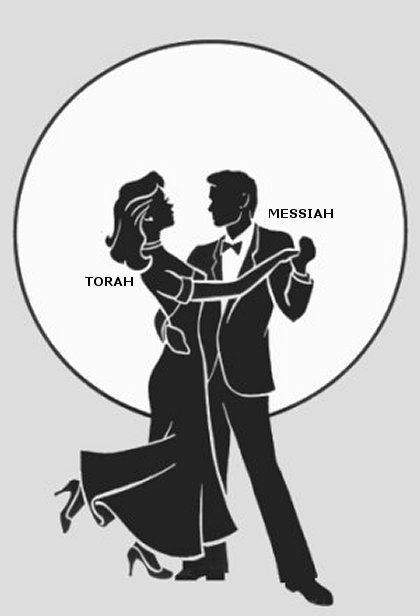 That is why knowing your system and carefully choosing your mentors under the guidance of the Ruach haQodesh (Holy Spirit) is so important. One needs a foundation in one system which can then be tweeked and modified as necessary. Mine was Anglicanism. Yours might be something entirely different. But an even more important matter is this: are your mentors and other teachers walking close to Christ? Do they know Him? Are the fruits of the Ruach (Spirit) evident in their lives? Because a sound understanding of Scripture comes only from an intimate dance involving a deep personal relationship with Yah'shua (Jesus) coupled with diligent Torah-study. And ideally, we should each have one spiritual father which in each family is the husband and father. Why is that so important? Because whilst teachers disseminate information, fathers and husbands pour out their lives and sacrificial love too. Thus we need to remember Paul's warning:
"For though you might have ten thousand instructors in Christ, yet you do not have many fathers; for in Messiah Yah'shua (Christ Jesus) I (Paul) have begotten you through the gospel. Therefore I urge you, imitate me. For this reason I have sent Timothy to you, who is my beloved and faithful son in the Master (Yah'shua/Jesus), who will remind you of my ways in Christ, as I teach everywhere in every congregation (church)" (1 Cor.4:15-17, NKJV).
The Patriarchal Way
This is why the Gospel Way is patriarchal (the opposite of the modern secular way) for it is the father's rôle to instruct his wife and children, even as he is instructed by his own spiritual fathers, for he must live by revelation from his Heavenly Father and establish the order in his family as well as learn from his peers (other patriarchs) of which one will be his local Pastor. That's not to say we don't, or shouldn't, learn from others because that's unavoidable but we must be careful to ensure they conform with Yahweh's Order by which we shall be judged one day.
B. THE MYSTERY OF LUZ

Some Basic Etymology - Eunuchs, Camels and Almond Trees
So what does 'Luz' (Gen.28:19; Gen.35:6; 48:3; Josh.16:2; 18:13; Jdg.1:23,26) actually mean? There is a reason the name is mentioned prior to Jacob's renaming it, just as there is a reason the old name of Jerusalem - Jebus - is told us in Scripture (Judg.19:10; 1 Chr.11:4). If you go to an old Concordance like Young's (which got it partly wrong) you'll be told it means 'bending' or 'curve'. If you go to a modern Bible Concordance you will probably be told that Luz means 'almond tree' or 'almond wood' and that is certainly one of two possible meanings. All human languages since the Tower of Babel suffer from corruption of one sort of another and ancient Hebrew has suffered no less. Because of its small vocabulary (compared with English), a single word like luz often carries multiple meanings which only the context can reveal. And when it doesn't, we have to resort to other means. It's the same in all languages, as I keep on reminding you, so we must be careful not to hastily draw conclusions.
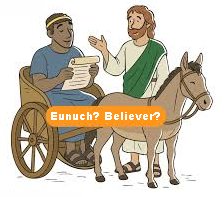
We have already encountered multiple word-meanings in Aramaic, for instance, the language Yah'shua (Jesus) and the apostles principally spoke in the first century AD when the New Testament was written (and then translated into Greek), include the Aramaic word that can mean 'believer' or 'eunuch', and another that can mean either 'rope' or 'camel'. These two, which you'll hear me speak of often, cause translators no small amount of difficulty, leading us to falsely believe that the Ethiopian to whom Philip witnessed was a eunuch rather than a Yahweh-believer (he was the latter), and also to falsely claim that the Saviour said it was easier for a 'camel' to go through the eye of a needle than for a rich man to enter heaven, when in fact it was a 'rope' that He was speaking of. 'Rope', which is a giant 'thread', makes a lot more sense than 'camel'- the rich man is like the expensive rope and the poor man like a piece of ordinary sewing thread.
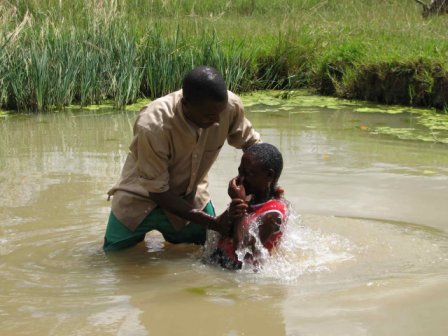 The African official Philip baptised was a believer, not a eunuch
Is Luz an Almond Tree or 'Twisted'?
The word Luz presents a similar problem. And before you decide that I am just 'splitting hairs' (no pun intended) and showing this bias or that, remember one other thing that all scholars recognise: every word with multiple meanings has a root word meaning. Luz, which evolved over the years into 'Lud', has a root meaning that means 'twisted' and its verb means 'to turn aside', which is preumably why Robert Young chose to translate it 'bending' or 'curve'. Here's where a knowledge of history becomes very important because not only do we first encounter the Canaanite settlement called Luz in Genesis 28:19 but Yahweh has also made sure we encounter it again in Judges 1:26 where many years later men from the tribe of Joseph sack the original Canaanite settlement called Luz (which Jacob renamed Bethel). The leader of that Josephite military detachment went on to found another - a second - settlement and called this new settlement 'Luz' too. Perhaps this time it meant 'almond tree' to indicate the spiritual prosperity the new Israelite settlers would bring? Who knows. (This is me making speculative connections to Joseph, the 'fruitful bough' - Gen.49:22 - and thence to the fruitful almost tree.)
Looking at Luz from Yahweh's Perspective
So remember the verb luz means 'to turn aside' but its noun means 'almond tree'. Most contemporary scholars make an assumption (and here we once again confront what I call the 'tyranny of assumptions') that the original Canaanite town of Luz was named after an almond tree and that that's the reason Yahweh wanted it named in the sacred text because of almond trees that grew in its environs, an unproven assumption as we have no idea if almond trees grew in that area at that time. It's just guesswork. So at this juncture we must be careful and you have to ask yourself the question: 'What does Yahweh consistently use the word 'Canaanite' to portray in the Bible?' Remember this is Yahweh's Book we are reading, not some secular historian's work - and though godly men were indeed conscripted to write it, making it a cooperative effort, its primary message is spiritual. We must always approach exegesis (scripture interpretation) from Yahweh's perspective, not man's. So why did Yahweh have the author specifically mention 'Luz'? Since the corresponding noun to the verb luz (meaning 'twisted' or 'turn aside') is lazut which means 'deviation' or 'crookedness', and given Heavenly Father's view of the Canaanites who were idolatrous and perverse, and who would become so ripened in iniquity by the time of the Exodus from Egypt that He ordered their complete destruction, we are forced to conclude that the Luz mentioned here may very well have been named after a "crooked and perverse generation" which Paul uses to describe the generation of his day in Philippians 2:15 too...as I would of ours. Here the apostle urges believers to live blamelessly as lights in a dark world, for this is a phrase that was commonly used by the Hebrews to describe a society that has deviated from Yahweh's moral standards, echoing earlier biblical warnings regarding human corruption.
 'Luz' can also mean 'twisted', 'crooked' or 'perverse'
Two Luz's - Jacob & Israel
So why did Yahweh cause Moses, the author of Genesis, to insert the old Canaanite name of Luz into the text? To contrast Jacob, the 'trickster' or 'deceiver' (the neophite believer embarking on his spiritual journey to overcome his carnal nature) with the perversion of the Canaanite land into which Yahweh had prophetically inserted him - a growing spiritual light who would be renamed Israel, meaning 'one who strugges with El (God) and prevails'. And though he was still a carnal man when he arrived at Luz, there was enough of the Ruach Elohim (Spirit of God) in him to make him shine as contrasted with the darkness of Luz and Canaan generally. Israel is a name which can also mean 'Ruling with El/God' because the first part of the name 'Israel' derives from a root word sara meaning to 'struggle', 'fight' or 'persevere'. What does this tell us? That righteousness has to be 'striven' or 'fought' for - it doesn't come from mere passive 'faith' as our English word might suggest but from the Hebrew emunah which means 'proactive faith'.
To Become an Israelite Means to Struggle & Persevere
I repeat - and underline - to be a talmid (disciple) of El Elyon (the Most High God) means you have to become a fighter, one who wrestles with angels until he gets the desired blessing and sanctification because Yahweh doesn't hand these out on a plate to armchair Christians. Never forget that! This is, in part, why we have been given the Story of Jacob the believer. Thus Israel also means 'Prince (Sar) of God' just as Messiah is called Sar Shalom, meaning Prince of Peace (Is.9:6), because He - as a human, as the Incarnate Elohim (God) - spiritually struggled, fought, and wrestled on the cross on our behalf, confronting and overcoming our sins personally for us (which we could never do in our own strength), in order to work out, and making provision for, a salvation for all humanity. In other words - to wrap this observation up - the name Israel, which, trusting in Yahweh, Jacob fought for at Peniel by the River Jabokk on his return journey home from Haran to the Promised Land with four wives and and even more children in tow many years later, represents his legacy of spiritual, physical and emotional struggle and persistence, defining the 'childen of Israel' - us, if we choose to trust Christ and become Torah-obedient - as a chosen people who are 'chosen' precisely because we persevere in our relationship with Elohim (God) and absolutely not because of that false, lazy, indolent, heavily compromised evangelical Christian doctrine called 'OSAS' - 'Once saved, Always Saved' - which says we don't have to do anything more than say 'yes'. Not so.
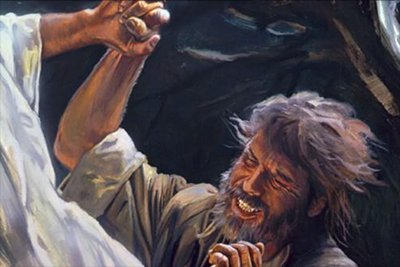 We wrestle to overcome like Jacob, not sit on our OSAS backsides
The Grandfather-Father-Son Principle
If you haven't already figured it out, I am in 'Big Picture Mode' (BPM) once more but this time giving careful attention to some key details which may be unfamiliar to you. If we are to gain the most from this short study on Nathanael and Jacob, we must constantly bear in the mind the 'bigger picture' of the Main Bible Storyline which is always about the salvation of the human race. So let's now ask ourselves another big question: what throughout the Bible, does Jacob, son of Isaac and Rebekah, the grandson of Abraham and Sarah, represent? That's my next question. It's an important question because he and his four wives and twelve sons are used by our Heavenly Father as a model for the millennial Messianic Israelite nation-to-come, members of which we are destined to become a part if we remain true and prevail. This New Kingdom manifests in a dramatic way from time of the second coming of Christ represented by the annual feast of Yom Teruah (the Day of Trumpets & Shouting) and which officially begins and continues to unfold on the last annual festival, Shemini Atseret in what I call the 'Deacon Phase'. Jacob-Israel, his four wives and twelve sons, also represent ideals, the nascent (newly born) nation of Jacob-Israel strove for leading up to the first coming of Christ. We, who are now called to begin manifesting New Covenant Messianic Israel in the few years before Yah'shua (Jesus) returns, are therefore to view the life of the patriarch Jacob as a picture of our own spiritual journey, along with the nation he would birth, with all its imperfections and struggles, as our goal in Christ who is the indispensable birthing and perfecting Agent. We are to view him like his father and grandfather before him, who are grouped together in a kind of sacred mantra - Abraham, Isaac and Jacob - Grandfather, Father and Son. Remember, please, that 'threesome' because we have already encountered it and are going to encounter it again.
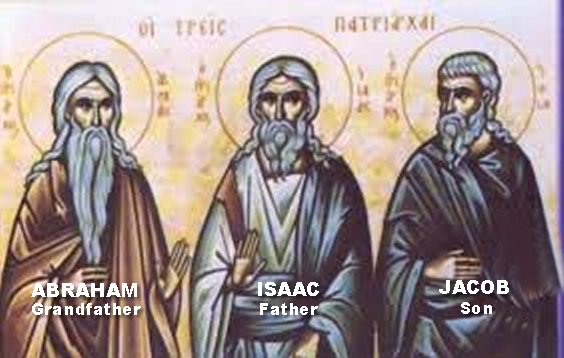
Because We Have a Terrible Habit of Forgetting
And if you're into Information Technology, as I was once as a teacher in that field for nearly a decade, and as a System's Analyst by training which I learned after getting two degrees in Biochemistry from Oxford, you will know - or will have heard - that when it comes to data security, we are instructed in the Grandfather-Father-Son System. When you're backing up data you are working on, you should always have three generational copies if you are going to get maximum security: the last-but-one data set (annually), the last data set (monthly), and the present data set (daily), so that if there is any accidental loss of information - as there always is as any of you will know who work with computer information - you can always then reconstruct what you have lost in part or in whole. And since our memories are notoriously unreliable, Yahweh has ensured that we remember the complex instructions He has given us that were lived out by three generations of His friends in particular - Abraham, Isaac and Jacob - as well as giving us weekly, monthly and annual moedim memorials. Up until modern times where career has been placed ahead of family, it was usually understood that men and women would marry young and raise up families so that in a world before the mass production of printed materials where oral tradition was the rule, the children would be able to draw upon the wisdom of the two previous generations.
 Three generations help us recover truth frequently and accurately
The Threefold Reason You Were Born
Embed the special relationship of these patriarchs in your consciousness and you will have a sound overview of the entire scope of the Bible and what it's supposed to guide us into doing and achieving with our short lives - the very reaaon we are down here on earth. There is a self-contained story in them that I am going to reveal to you now. To that end you, have all received some printed notes in the form of two tables. If you are watchhing this video online you'll find these on the website marked with red and green dividers, respectively. And if you're reading this on social media (like Facebook, MeWe or Gab) you'll find them reproduced in the Comments sections. So let's look at the first or 'red' table. These are 'The Three' elements of the story personified in the Three Patriarchs of Israel:
TABLE 1 - The Three Patriarchs Themselves
- 1. Abraham (Avraham) (Alef), the First Patriarch (Grandfather) and father of emunah or proactive faith itself (Gen.15:6; Rom.4:3; Heb.11:8; Rom.4:20-21; Heb.11:17);
- 2. Iaaac (Yitzhak) (Mem), the Second Patriarch (Father) and fulfillment of Yahweh's promise, the (1) joy and (2) laughter of unexpected blessing after (3) a long delay (remember those three signposts, please), and a foreshadowing of Yah'shua the Messiah's (Jesus Christ's) submission and sacrificial obedience, who represents believers like you and me born of the Ruach (Spirit) rather than the flesh, thus highlighting our (1) Heavenly Father's grace (undeserved loving-kindness), (2) patience in waiting, and (3) trust in divine provision (Gal.4:28; Gen.21:1-3; 22; 25:5; Heb.17:19; Rom.9:7); and
- 3. Jacob (Ya'akov) (Taw, the foundational transition from a single family to the nation of Israel, the Third Patriarch (Son), symbolising (1) perseverance, the (2) struggle with Yahweh and oneself in overcoming sin, and the (3) transformation from being a 'deceiver' and 'supplanter' into a man and nation of true faith.
I recommend you keep these two tables in your Bibles somewhere or write these out and keep them displayed in a prominent place in your home in order to memorise them because they are critical to an understanding of what the Remnant is and reminder that Yah'shua the Messiah (Jesus Christ) is the perfect embodiment of them!
The Three Patriarchs & the Three Sets of Annual Festivals
Therefore let me encourage you with soberness and love by saying: let him or her who has eyes to see, now see (Mt.13:9,16; Mk.4:9; Rev.2:7)! THESE THREE ARE KEY.
Because if you will reflect back on all I have taught you these past 40 years, you will see a direct correspondence between the three patriarchal ancestors of Israel and the three main groupings of the Annual Festivals of Yahweh we are commanded to observe and learn from:
TABLE 2- The Three Patriarchs' Wives & Children
- 1. ABRAHAM (Alef) = The three Spring Festivals of (1) Pesach (Passover), (2) Chag haMatzah (Feast of Unleavened Bread) and (3) Yom haBikkurim (Day of Firstfruits) [1], which correspond to his three named plural wives, (1) Sarah, (2) Hagar and (3) Keturah (there are other unnamed ones who are not symbolically important to the Messiah Story) [2];
- 2. ISAAC (Mem), cp. Joseph [3] = The singular Summer Festival of Shavu'ot (Weeks, Ekatost or 'Pentecost'), which corresponds to his singular wife, Rebekah); and
- 3. JACOB (Taw), cp. David [4] = The four Autumn (Fall) Festivals of (1) Yom Teruah (Day of Trumpets or Shouting), (2) Yom haKippurimm (Day of Atonements or 'Yom Kippur'), (3) Sukkot (Tabernacles, Booths) and (4) Shemini Atseret (Last Great Day), which correspond to his four plural wives, (1) Leah, (2) Rachel, (3) Bilhah and (4) Zilpah.
Why Yahweh is 'the Elohim/God of Abraham, Isaac and Jacob'
OK, are you ready to dig deeper? You see, this is why Yahweh insists that He be known (as one of His titles), "the Elohim (God) of Abraham, the Elohim (God) of Isaac, and the Elohim (God) of Jacob" (Ex.3:6,15; 4:5; 1 Ki.18:36; Mt.22:32; Ac.3:15) and not 'the God of Adam, Abel, Seth, Enoch, Abraham, Isaac, Jacob, Joseph, Moses, Joshua, Caleb, Hezekiah, Isaiah, Peter, James, John' and the hundreds, if not thousands, of others who are worthy of belonging there too, but to underline a divine, spiritual tavnith or pattern. This is a huge subject about which I could preach a hundred sermons, because this threefold division appears everywhere in Scripture, including the æons or ages of history itself. And though the Bible does indeed, with our first parents, Adam and Eve, foreshadow Isaac and Rebekah, who are a type of the current and incomplete pre-Millennial Æon or Age, the tail end of which we find ourselves situated in, and on the cusp of, namely the Millennial Æon or Age, which is itself but a metaphorical breath away from the Messianic Æon or Age we have been longing for: for you cannot have failed to notice that the pre-Christian and post-Christian Æons or Ages that have already been, and are yet to be, or are, differ in one significant respect from the current Christian one which is defined most emphatically as a Greco-Roman European and American Civilizational Age.
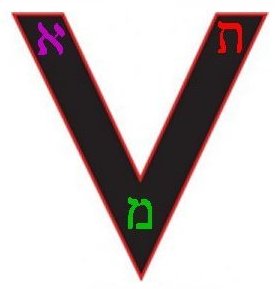 The three key repeating principles reflected as the Elohim (God) of
Abraham (alef/alpha), Isaac (mem/mu) and Jacob (taw/omega)
The Decline of Western Civilization is Part of the Divine Purpose
It should be obvious to you by now (if you have spiritual eyes with which to see, and spiritual ears with which to hear) that Western European (and now American) Christian Civilization has been in major decline since the Second World War and is coming to an end. It's dying because it was never the fullness of what the Messianic Kingdom was supposed to - and is going to - be. It has to die because it cannot be revived or go any further, corrupted as it was early on by the European Greeks and Romans, and now by the modern Europeans and Americans. We are in a transition - a very painful one, as transitions tend to be - and why it is this Penultimate Judgment has been absolutely necessary, because important though it was - and here I differ from the ultra-messianics who see only in black-and-white - it was never the 'end product', just as Isaac wasn't. Jacob, renamed Israel, was the 'final product', who finds his filfillment in the Messiah - the Christ - who is Himself - the New Israel, and from whom alone the Messianic, Millennial Israel can proceed, built on Him and nothing and no-one else.
Summarising the Big Picture
That's quite a bit to take in so I have tried to summarise everything we have looked at today in a single diagram which you'll find on your handouts or near the very end of the website article if you are listening to me on video. There's also a footnote appendix which explains a little more which you will find on the website too that I won't be including on the video. In a nutshell, this diagram explains in just a little more detail a few of the reasons why Yahweh refers to Himself seven times in Scripture as "the Elohim (God) of Abraham, the Elohim (God) of Isaac, and the Elohim (God) of Jacob" (Ex.3:6,15; 4:5; 1 Ki.18:36; Mt.22:32; Ac.3:15) because they are the founding fathers of Israel and now Messianic Israel and as such contain the divine tavnith or pattern that runs right the way through the Bible from Genesis to Revelation. He did not choose a singlular, faithful servant (like Abraham or Jacob) to represent the Qodesh (Holy, Set-Apart) Nation for one especially important reason: He wants us to understand that salvation is a maturation process that:
- 1. Begins with initial or mixed alef (alpha) salvation represented by Abraham beginning his relationship with Elohim (God) by trusting Yahweh with all his heart (the purple letter at the top of the lefthand side of the chevron or V in the diagram), which we now do through Yah'shua (Jesus) the Son in the New Covenant and symbolise in the dedication ceremony called baptism, which Jacob signalled by erecting and anointing a pillar at Luz or Bethel;
- 2. An intermediary mem or singular phase represented by Isaac (the middle letter of the Hebrew alphabet) that corresponds to a commitment made by His talmidim (disciples) to be obedient to His Torah mitzvot (commandments) (the green letter at the bottom of the V), which is variously known as Bar Mitzvah, Chrism and Confirmation, our betrothal, corresponding to Jacob's marriages in Haran; and finally,
- 3. The final taw (omega) plural, maturation phase that corresponds to the full sanctification of the Messianic Bride, the full marriage or mystical union of all true obedient believers with the Heavenly Bridegroom, those who endure to the end (Mt.24:13; 10:2), corresponding to his wrestling with the malak (angel) at Peniel and overcoming his flesh - a Bride that is both One (represented by Rebekah) and many (represented by the 3 wives of Abraham, the 4 wives of Jacob-Israel and - ultimately - the 7 wives of the Davidic King of Israel).
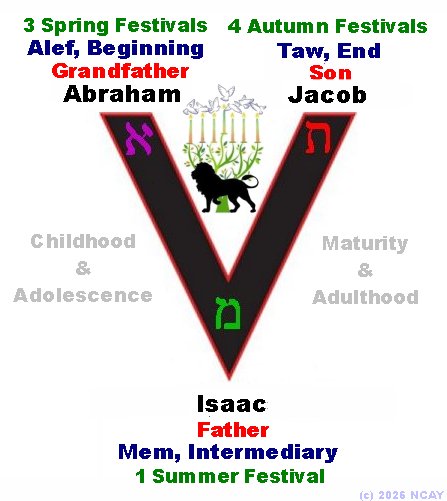 The Elohim/God of Abraham, Isaac & Jacob Principle Summarised
Conclusion
And that, brethren and sisters, is - in a nutshell - the 'Big Picture', the 'Grand Story' I have been telling since I first entered the ministry 40 years ago and where we shall end this series on Jacob. I hope this has been, in some small way, a blessing to you. So with my task done, I take my leave and invoke Father's blessings on you all in Yah'shua's (Jesus') Name. Amen.
Endnotes
[1] Notice how these three festivals are also viewed as a unitary 'Passover Season' of '3 festivals-in-one' with Trinitarian alusions, one of which is a sevenfold one that is pointing to Sukkot (see [4] below).
[2] See Books of Abraham
[3] Isaac is again reflected in Joseph, the firstborn of Jacob, who had a singular wife Asenath, and these (in turn) point back to Adam's singular wife Eve where the human family first began.
[4] Jacob (as Israel) is then reflected in David and his seven legitimate wives (excluding Bathsheba, the adulterated wife of Uriah) - Mikal, Achinoam, Abigail, Ma'akak, Haggith, Abital and Eglah. David is a type of the Messianic King, Yah'shua the Messiah (Jesus Christ) and to all Seven Annual Festivals (minus Shemini Atseret which starts the new millennial cycle) - notice also the sevenfold (7-day) nature of Sukkot, and Chag haMatzah which is pointing to it, just as Jacob is pointing to Israel. 4 (Jacob/Israel) is the number of the Aaronic/Levitical Priesthood (the four fulfilled Spring & Summer moedim) whereas 7 (David) is also the number of the Melchizedek Priesthood (including the three unfulfilled autumn moedim.
 See The Order of Melchizedek: The Rainbow Upon Yah's Head
 V505
V505

|