

Chapter 15
Jenny Discovers the Truth in Drottningsholm
Silvia and Hilda came through Customs. The moment they saw Stan and his party they squealed for joy, abandoned their trolleys, and threw themselves on the three men. Stan introduced his two distant relatives to them and the seven of them headed off for the carpark. Jenny immediately noticed that there were 'seven' of them and wondered ...
"What are your plans, girls?" Stan asked Jenny and Märta. "Would you like to come for lunch with us? We're going over to Drottningsholm to a restaurant Karl has booked for us and then after lunch we're going home so that we won't be too late. It's a long drive. You're most welcome to join us!"
While the young ones loaded the car up, Stan had a brief word in the ears of Hilda and Silvia to tell them a bit about Jenny and Märta, and not to mention anything about plural marriage until he gave them a very clear signal that it was all right. They understood and nodded.
After an agreeable drive to the island of Drottningsholm they parked the car and settled down for lunch. Though Hilda and Silvia were dying to talk about other things, they understood that this time was especially for Jenny and Märta.
 Drottningsholm
"As I was saying in the airport," said Stan, "there can be only one meaning of Isaiah 4:1 if you take it as it stands, so I leave you ladies to draw your own conclusions."
With three extra people present they did not feel as relaxed as before and so Hilda took up the conversation.
"Oh, I do like Chapter 5, don't you, especially the opening part? You know, the Song of the Vineyard."
"Yes, isn't that the chapter that Jesus based His parable of the tenants on, Stan?" asked Silvia.
"I do believe it might be," answered Stan. "But that chapter is so deep because it's about so many different things, depending what level you're on."
"How do you mean, Brother Królewiec?" asked Karl.
"Well, Chapter 5 is looking into the past. The vineyard is Israel which He had such high hopes for. Indeed, Israel is described as His allegorical wife, isn't she? Even when Israel split into Judah and Ephraim, God still described them as His two wives, even though in the end He had to divorce them for spiritual adultery. He had to punish them for their wickedness, even though it hurt Him deeply. It is a terrible chapter.
"But we are given hope - that's why Chapter 4 comes before so that we know there will be a happy ending. In a way, and on one level, the "man" in verse 1 is God the Husband, and the seven "wives" are repentant Israel. They have lost their "husband" - their false religion and worldliness - and now all they want to do is come back home. Like the Prodigal Son in Jesus' parable, they are willing to earn their own bread just as the prodigal son was willing to become a hired servant. But there's good news for both - the wives and the prodigal will be embraced and welcomed home."
"So those seven women probably didn't have to earn their own keep?" asked Karl, interested.
"No, but they had to be humble enough to be willing to do it, for that was a sign of their repentance. These women knew they had done evil, they had lost their husbands, and now they had to return to their true Husband, the Lord God of Israel." said Stan.
"Oh, so this is symbolic," asked Jenny.
"On one level, yes, because all prophecy has at least two meanings, sometimes more. Allegorically the seven women returning to the one man is the return of Israel, which is the Church, to her Bridegroom, Jesus. Jesus, as you know, is allegorically "married" to all true Christians, who are looking foward to the Great Marriage Feast of the Lamb in heaven after this world has all passed away. But Isaiah 4:1 is also literal for it is describing as many as two historical events, though more likely only one - the Millennium.
"So seven women will literally be married to one man, then?" she asked, worried.
"Yes, that's what the text says," joined in Władysław. "The false Israelites and Christians were all married monogamously to wicked husbands, and their husbands led them astray and were punished by being killed in battle. Because there were so few godly men, the women chose instead to marry godly men polygamously."
Märta was beginning to understand now.
"But once the population readjusted itself, and there were as many women and men, then presumably they would all become monogamous again?" suggested Jenny, hopefully.
Władysław wasn't sure how to answer that one.
"My understanding," broke in Silvia, happy to be a part of the discussion, "is that righteous women will always outnumber righteous men. It's usually the men who introduce wickedness into society and then the women follow suit afterwards. It's natural for them because the man is the head of the woman, so the man is responsible. Hence God's severe punishment."
"But couldn't the men repent like the women and be saved?" asked Jenny, slightly confused, for these were all new ideas to her.
"Many do and are allowed to live - the punishment of death falls only on those who were the most wicked," continued Stan. "However, this passage is not only about physical warfare, but spiritual also. Look at the state of the Churches today. Look where the male priests have led the Churches even to accepting homosexuality. Half the priests in the Lutheran Church are homosexuals, a large number of them are practicing too, and many have been exposed as pedophiles. They are teaching false and obnoxious doctrines, even denying the deity of Christ. They are fulfilling another prophecy by their apostacy, for when men revolt, women and youth step in and take over. Do you remember what Isaiah said in chapter 3 and verse 12?
"'Youths oppress my people, women rule over them. O my people, your guides lead you astray; they turn you from the path'.
"That same condition which obtained in Isaiah's day obtains in ours. Men have apostacised and now women priests are taking over and doing their job. But they have been corrupted by the men too, so they are just advancing the apostacy even more. And who defines our culture today? Youth. Our whole pop-culture is based on the rebellion of youth.
"There aren't many sound ministers these days, just as there aren't many godly husbands. Finding ministers true to the Bible is rare, and finding godly men is even rarer. That's why women outnumber men in the churches by as many as seven to one in some places. In Canadian society as a whole women outnumber men by as many as three or four to one. In Latvia it's even worse with more than seven-women-to-one-man there. So what choice is left to these women? Since they can't find Christian husbands, they must marry unbelievers, which is forbidden in the Scriptures. Or they must remain single and die as old maids, or apostacise and become harlots. Isaiah 4:1 is God's provision for women both in terms of marriage as well as salvation."
"Salvation?" asked Jenny with another worried look on her face.
"If women cannot find good Christian husbands, what are the options? If they want to marry (and who doesn't), then they must marry unbelievers who will likely lead them and their children away from Christ. Either the husband will dominate and force the woman to renounce Christianity or force her to run away, or they will compromise and she will be left with a diluted, 'half' Christianity. So what is the best solution?"
Jenny understood but was finding the whole topic mind-boggling. It hadn't quite percolated down to her heart yet, but when it did, there would be the usual tussel with the flesh.
She now suspected that Stan was married polygamously but didn't dare pop the question in front of the others. Hilda finished the topic of conversation:
"I am convinced that not only in the Millennium but in the eternities that there will be far more saved women than men, so what we read in Isaiah 4:1 is actually the normative condition of the spiritual man and woman. I call it "spiritual marriage" because it's the same kind of relationship that Christ has with us on a symbolic level."
Hilda had been studying Stan's homepage well.
Märta had sat silently throughout but could no longer hold herself back:
"You wouldn't marry more than one woman, would you, cousin Władysław?" Her question was a plea from the heart to clear the ground for their courtship to proceed on her terms. Though he knew what his answer would be, he searched around for the kind of answer his father would give - the answer that would put the ball back into her court for play.
"The Bible is full of examples of difficult choices, cousin Märta, but in every one of them those that followed the Lord were always blessed," said Władysław.
He struggled for some examples.
"Rebekah married Isaac without ever having seen him or having any sort of courtship because their marriage was arranged, but they were happy, because God led them," said Władysław, knowing that a monogamous example would have to be followed up by a polygamous one to get his point over.
"You didn't answer my question," said Märta slightly irritated and not at all put off by the presence of the others. Jenny glanced irritatingly at her cheekiness but Märta was determined to get an answer.
Władysław was floored. Märta was a determined young woman when she got going and for a moment he felt confused. What biblical examples could he give? He could see that she could see that he was slightly nervous. She had the advantage now - he had lost control, doing what his father had always told him not to do. The problem was he was interested in this woman and couldn't exactly treat her like one of his father's adversaries in theological debate. He didn't want to answer the question and grew quiet.
"I guess that means 'yes'", said Märta whose blood was now really boiling. "Only a stupid, brainless woman would ever marry polygamously!"
"Märta!" said Jenny under her breath scowling at her. "Mind your manners!" But she was unapologetic for as far as she knew there were no such women present.
"I guess that must make Hilda and I stupid and brainless," said Silvia, looking softly at Märta.
Märta was floored this time. She had put her foot into it and felt an idiot. Now she didn't know what to say and was too embarrassed to answer.
"You mean, you two are coming to Sweden to marry polygamous husbands??" asked Jenny incredulously.
"That's right - hadn't you noticed our happiness?" said Hilda.
Now Jenny was floored. And it suddenly dawned on her that maybe all of the present company, Märta excepted, were polygamists or shortly to become polygamists.
Stan was not very pleased with the way the conversation had unfolded but what was done was done, and he wasn't about to cry over split milk. The important thing was to stay calm, not be apologetic, and remain warm and friendly.
"Well, I guess you two have a lot to think about," said Stan kindly, "so I don't think it's appropriate that we take this conversation any further. This isn't, in any case, really the time and place. You will also recall that I really didn't want to get into this conversation, but," he said, looking at Jenny, "you did press me outside the airport, so I think you two must bear some of the responsibility for all of this. I did not come to Stockholm to talk about this subject, and neither did I have your dreams, for that matter. What I don't want is that there should be any ill feelings on anyone's part. Family is precious and I am truly grateful to have found you two, and Pär and Anne-Marie. Had the Lord not given you the dreams you had, we would probably not be talking about this subject ..."
Władysław disagreed but said nothing.
"We have to drive in about a quarter-of-an-hour so, please, let us separate amicably, as cousins in the Lord Jesus Christ. The Gospel is full of deep and sometimes challenging things, some of which are best not dealt with until the Lord makes the time and conditions right. I think it was wrong of us to talk about this subject, and I know I bear some of the responsibility. Please forgive me if we have offended you in any way."
Now Jenny was feeling guilty. Stan was being very nice and it was they who had come with the dreams. The trouble was, they could never forget those dreams, and she knew somehow that she would have to accept the consequences of them. They weren't accidental, she knew that, leaving only the possibilities that they were either from God or the devil. And that she would have to find out in her own time.
Stan paid the waiter and they left the restaurant for the carpark.
"Can we drive you anywhere?" asked Stan to Jenny. "We're going near Sundbyberg on our way north and we could drop you by the nearest subway if you like?"
Jenny smiled gratefully. "Yes, thank you, Stan that would be nice," and gave him a hug.
"Do one thing for me, Jenny?" asked Stan. "Keep this matter between yourselves. It's a topic that tends to get everyone but the spiritually strongest upset and I wouldn't like to spoil our new friendship with Pär and Anne-Marie."
Jennie nodded and smiled again. In spite of her inner confusion - for feelings were now coming into play - she did like Stan a lot and the chemistry was strong. Stan opened his briefcase.
"I imagine you will either want to forget everything we have talked about - including your dream - or you will want to study it out to its conclusion. If you decide to do the latter, then I'd like to invite you to look at this flashdrive which contains my website and examines the matter in great detail. If you decide to do the former, then just lock it away some place safe until you do decide you want to look at it ... assuming you ever do."
He handed her the flashdrive and then everyone squeezed into the estate wagon. Part of the trunk (boot) converted into two seats so Władysław and Karl squashed into them until they dropped Jenny and Märta off at Sundbyberg. For ten minutes they chatted about everyday things so that the parting would be amicable, and then the long journey to Kadesh-Naphtali began.
What an amazing three day trip it had been. In his heart Stan was sure the girls would pull through but Władysław had grave doubts. He had, in restrospect, found the whole business unpleasant and began to wonder if his attraction to Märta had been purely fleshy. Stan sensed something was amiss as his son sat silently in the front whilst Karl talked to Hilda and Silvia in the back.
"You're having doubts, aren't you, son?" asked Stan.
Władysław nodded slowly.
"To be a polygamist you have to be brave in courtship both before and after marriage. If you're the sort of person who wants a trouble-free marriage, then plural marriage probably isn't for you."
Władysław slowly shook his head.
"The problem isn't with plural marriage, father, but the fact that Märta made me look a fool."
Stan laughed softly. "Is that all the problem is?" he said. "You'll have to get used to that in monogamy as well as plural marriage, you know. The Jezebel spirit is strong in the modern woman and we have to work hard to get it out of them. It's engrained into them from birth, especially in this country."
"Yeah, and Märta has got it bad," said Władysław with raised eyebrows.
Karl laughed.
"You haven't got Maria," he said teasingly, hoping not to offend Stan. But Stan took it in good humour.
"Can you imagine what Maria and Märta would have been like as sister-wives," joked Karl even more.
Władysław grinned.
"All right, boys, that will do", said Stan. "It's tough for the women, especially when they're young and are still discovering who they really are."
Hilda and Silvia were listening with interest.
"What do you think about Jenny, Stan?" asked Hilda, wondering if he had any inkling as to whether there was any possibility with her.
Stan smiled. "She will come ... she will come, and she will be strong," and nodded as though putting the concluding punctuation mark at the end of his sentence.
"What about Märta?" asked Silvia.
"You must ask Władysław that one - she's his responsibility," replied Stan.
"Well, Władysław?" asked Silvia again.
He didn't answer. He'd had quite enough for one day. Now he wanted to think only of Karin. Things had happened suddenly and very quickly between them once Władysław had gotten the fiasco with the Satanist woman behind him. He had decided that he would play it safe and marry someone from nearer home - someone who shared the same values as he did.
"I think Karin just got into the car," said Stan chuckling, and the women understood. Władysław had closed his eyes and was falling asleep.
------------
Märta and Jenny didn't say a word to each other on the way home to their uncle's, even though they both wanted to. Jenny had already figured both their dreams out - Stan had eleven wives and she was marked by the finger of God to be his twelfth. And Władysław probably already had one and Märta would be his number #2. She not only did not like the thought of plural marriage but the thought of being number #12 somehow made it all very remote to her. What sort of a relationship could she hope to have with a man whom she would have to share with eleven others? She figured she would only see him once every twelve days - perhaps only once a fortnight (two weeks) - and that was by no means attractive. How could she ever be induced by that "temptation"? Stan was all very nice, and she knew she was slowly falling in love with him, but somehow the plural marriage question erected a huge mountain between them.
"That was what the mountain meant!" she exclaimed within. Suddenly she understood another piece of the puzzle. Life was beautiful this side of it but it was as cold as winter. She wanted a husband badly. She was in her thirties and still hadn't found the right man. There had been many suitors but she hadn't liked any of them. Only Henryk von Stwolinsky had come anywhere near. Of Polish-Swedish extraction, he was Catholic and violently anti-Protestant which she as a Lutheran Swede could never accept. On the other side of the mountain was the home of Stanisław Królewiec, but what was polygamous life there like? She had to find out! The dream hadn't come out of thin air - she was being shown something about her future, as was Märta.
Their vacation in Stockholm was, however, over, and it was time for Märta to return to Oxelösund, and Jenny to Katrineholm. Every day she remembered the dreams she had had, and every time she tried to extract more and more meaning out of them. Finally, she took out Stan's flashdrive and began the study of his plural marriage webpage on her laptop computer.
To say that Jenny was overwhelmed would be an understatement. Once she had started, she simply could not stop. A whole new world of ideas, feelings and fantasies at once seemed to crowd her soul. After each reading session she would sit in bewilderment, wondering whether she had been reading some sort of Baron von Münchhausen1 yarn. How could a Prussian aristocrat from a strictly formalistic and Protestant upbringing possibly be a polygamist? The revelation was not at all unlike discovering that Queen Victoria of England was in fact a carpet seller from Baghdad. And yet she knew from the little history she had studied that those early Prussian aristocrats were not as monogamy-minded as they were later to become in the latter era of strict Victorian monogamy.
Indeed, in the 18th century King of Prussia, Frederick William II (1744-1797), a skilled cellist and patron of the arts (like his predecessor Frederick the Great) to whom many famous composers like Mozart, Hayden, Boccherini and Beethoven dedicated various cello-centric compositions, as well as being the builder of the famous Brandenburg Gate in Berlin, had had several wives, one "offical" wife and three common-law wives, four in all like Jacob of old. All of these women were noblewomen, she discovered, for whom he maintained separate households for each: Elisabath Christine of Brunswick-Lüneberg and (later) Frederica Louisa of Hesse-Darmstadt (the dynastic wives), Countess Wilhelmina von Lichtenau, Countess Julie von Voß, and (later) Countess Sophie von Dönhoff. These were known in royal circles as "left-handed (non-public) marriages". Not only that but Frederick William had taken as his precedent the great Reformer Martin Luther's original pronouncement in a letter written in 1539 to Count Philip, Landgrave of Hesse:
"I confess that I cannot forbid a person to marry several wives, for it does not contradict the Scripture. If a man wishes to marry more than one wife he should be asked whether he is satisfied in his conscience that he may do so in accordance with the word of God. In such a case the civil authority has nothing to do in the matter."
So Stan wasn't exactly doing anything novel or anti-Scriptural since the head of her own denomination had given the green light to plural marriage, though he changed his mind later under extreme pressure so as not to give the Catholics a political advantage and so endanger the survival of the Reformation. Nevertheless, it was still all very "novel" to her, including Luther's original theological stance.
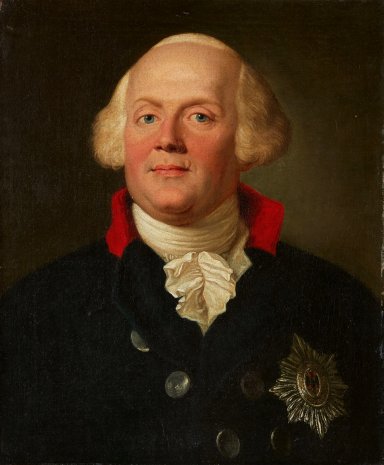 Frederick William II, the polygamous King of Prussia
Jenny decided to e-mail Stan. She felt that it would be easier for her to address her questions at a distance than to go up to meet him which, though she wanted to, felt it inappropriate whilst she could not maintain her composition and dignity. As an aristocrat with an aristocratic upbringing, maintaining self-control and poise meant a great deal to her.
I must confess I am not entirely sure how I should begin this correspondence with you as I am sure you will by now realise that the matters we are presently communicating over have come as somewhat of a shock to me. Nevertheless I wish you to know that I am open and willing to learn provided that which we discuss is according to God's Word.
I have been studying the materials you sent me on the flashdrive and to date I cannot find fault with them, even though they are surely very new to me and difficult to grasp. My greatest problem is understanding how you, a Prussian gentleman, could have found yourself enmeshed in a marital system which is - how shall I put it - contrary to all our cherished customs?
I am also curious as to the fate of the von Brandenburg-Schwedt's. Do you have any further information?
Respectfully, your cousin,
A reply came within a couple of hours.
May the grace and peace of our Lord Jesus Christ always be yours.
Thank you for your e-mail which I received with pleasure. I gather from the content that you have worked out the meaning of your dreams.
Yes, I fully understand your feelings in this matter, and the more so given our common backgrounds. Yet customs, as you must know, are a strange and ever changing species, that owe their origins more to human whim than to any divine imperative. It would be wrong to look upon our ancestors as having a uniform set of customs, moreover. The Prussian aristocracy were every bit as morally diverse as any aristocracy of their time, from the libertines to the gentlemen Christians like Schwerin, Still, Fouqué, Zieten, Moller and Kahlden. Then there was the redoubtable General Belling who conducted fervent hymn sessions in the immediate presence of the enemy, just like Hezekiah of old! How I love those men!
And their wives were remarkable women too who actually defied custom to be with their husbands on the battlefield. Take the wife of General von Tresckow, the garrison commander of Neiße in Silesia (today known by the Poles as Nysa) who negociated with the Austrian enemy so that she could join her husband in the fortress in the middle of a siege!
Of all the European nobility, we Prussians have been the most misrepresented of all, especially by the modern Anglo-Saxons who have categorised us all as fiends because of the rennegade Hohenzollern Kaisers and the barbarian nazis. But the Hohenzollerns weren't true Prussians at all - they came from the south - and nearly all of the nazis were west- or south Germans - that chicken-farmer Himmler from Bavaria, the Rhinelander Goebbels, the west German Göring from Rosenheim, and the Austrian corporal Hitler from Braunau. Most of the opposition to Hitler was organised by Prussian aristocrats like us. We are an historically maligned people. And do you know, they call us war-mongers, and yet as you look at the history of the major powers from the time of the Brandenburg-Prussian league to 1945, you will discover that France, England, Russia, and Austria (to name but four) waged four or five times as many wars as we did.
Cousin Jenny, you and I are of a nobler breed, from the barren northern part of Germany, from the mark of Brandenburg and the eastern provinces. Our people were courageous and daring. And yet they were not ostentatious but were truly internationalists. Prussia welcomed refugees like the French Hugenots, many of whom rose to distinction like the French General Fouqué. And their women were cut from the same cloth. Democracy was never in our blood for we have always sought out an enlightened aristocracy - that is why the liberals and communists destroyed us as a nation in 1945.
My first wife, Suszana Reichshofen, is of the same Prussian line as you and I, though rather more mixed than yours. From the moment I saw you I felt not just an ancestral kinship but something infinitely deeper. And I am confident that you are of such a spiritual disposition that will make you feel an even closer kinship with a family system that is infinitely older than Prussia and which will enable you, should you choose to align yourself with it, to realise the full extent of your God-given potential.
Your devoted servant in Christ
Stanisław Brandenburg-Schwedt Królewiec
Though she couldn't explain why, Jenny was deeply moved by Stan's letter. It was not what she had expected in the least. His appeal to her ancestral qualities both surprised and pleased her, for she knew that he was the custodian of something but wasn't sure what, nor how it would have any application in the modern hedonistic and neo-pagan liberal democratic world. For the first time she began to see that maybe there was a possible application to Stan's plural marriage though she could not quite see it clearly yet.
She answered his letter immediately and asked when she might come and visit him at Kadesh-Naphtali.
"Tomorrow," came the immediate reply, "then you will be in time to witness several weddings, including two of mine, my son's and my daughter's."
Though shocked at the revelation Stan was about to marry two more times, she accepted without hestitation, galvanised by the thought of witnessing some plural marriages taking place. She did not even wait for the next day but was on an afternoon train to Stockholm and from there to Mora. Jenny Stattin, who was becoming conscious of her advancing years, would not be wasting any more time in her life.
1
An 18th century German soldier who served with the Russians against the Turks and wrote a collection of wartime tales called Vademecum für lustige Leute. Later, in 1793, Rudolf Erich Raspe wrote a collection of unbelievable tales based on the Baron's life called Adventures of Baron Münchhausen.


This page was first created in 2002
Last updated on 26 July 2026
No part of this work may be reproduced or stored on any
medium without the express permission of the publisher.
Violators of this copyright will be prosecuted
Copyright © 1987-2026 Chavurat Bekorot
All Rights Reserved | Alle Recht vorbehalten