

Chapter 10
My New Life Begins
Second Expanded 2026 Edition
The first time I heard Kasia arguing with Stan over some disagreement came as quite a shock. I had assumed, contary to what I had been told, and quite naïvely, that I would be walking into Paradise and the perfect family when I settled in Raj. Kasia was, as I have said, a very passionate and at times temperamental personality which belied a deep-seated sensitivity and loyalty to Stan and the family. She was not of the diplomatic persuasion and liked to call a spade a spade which, whilst certainly desirable at times when spades needed to be called spades, could occasionally hurt others. She could also get deeply hurt herself. Not one to usually hold a grudge or harbour any sort of malice, she would somehow find it within herself to procure a healing balm to pour over anyone she had affronted soon after such an outburst.
She had once called Stan her "lovable tyrant" which had not only shocked me but I was equally as surprised by Stan's reaction: he took it with a pinch of salt. Self-willed and independent-minded, she found the idea of submitting to her lord and master far from palitable always. I had once heard Stan say to her, in one of her outbursts:
"Madam" (he always addressed a wife formally when displeased with her), "the issue is not whether you or I are right, but whether you are submitted to my leadership or not. You have the right to express your opinions and to present your case provided it is done in a tone that is conducive to friendly, pressure-free discussion and not argument."
Dear, red-headed Kasia! Life could sometimes be a great up-hill struggle for her but she was at least passionately committed to the Lord. I admired that. She had a great sense for what other people were thinking and feeling, and could empathise in moments when we, who were affronted in some way, had closed down. It was the character strengths and defects in all the wives together which made the family such a special place to learn and grow. There was always someone who could understand and counsel. Little wonder that patriarchs and their families used to flock to Raj for advice from as far afield as Indonesia and Argentina. Families would come and stay a week or two just to see how so many people in close proximity got one with each other and to get ideas for their own households. Not that the learning was one way by any means - we learned from our visitors a great deal as well.
------
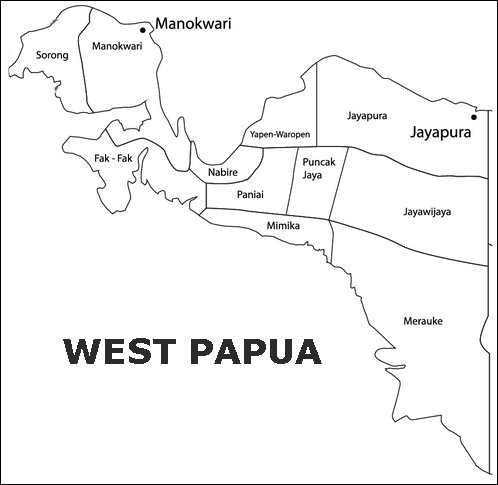
Take Eko and Sri, for example, an Indonesian couple who visited us briefly for a few days one summer on their way to a Christian conference in the capital. They came from West Papua, an eastern province with its own distinctives where plural marriage is permitted to the indigenous natives subject to court permission. Most there ignore the state's rules and privately perform kawin siri or unregistered religious marriages amongst their own kind, a bit like ourselves.
Usually polygamy is only practiced by Muslims and by traditional Papuans in the country, who together represent about 5 per cent of the total population. Now you might not think that's much until you do the math and realise that about 14 million people live this way! To give you some idea of scale, that's bigger than the total population of Belgium or of the state of Pennsylvania. Try to picture driving into the Keystone State from New York and finding every single person you meet being part of a plural marriage family! Yet few Christians live the polygamous way in Indonesia because it is disapproved of by the other 95 per cent.
What I think impressed me so much about this Indonesian couple was they were not at all phased by the attitude of the majority. They both came from a part of West Papua where polygamy had always been part of the culture, where settlements were few and the natives had lived their way of life for millennia. While Stan and Eko talked theology in his office, Sri showed us photographs from her village. Without a trace of shame or embarrassment, she showed us snap shots of life from a traditional subsistence farming community wearing the attire they had always worn for thousands of years. Had it not been for the occasional battery-run appliance or TV set you would have been forgiven for thinking you has gone back in time.
"That's me on my wedding day," said Sri proudly. A mixture of gasps and giggles, surprise and delight, shock and admiration, erupted from us wives. For there they were: Eko completely naked except for a koteka, a traditional gourd worn on the male organ, and Sri completely topless wearing a skirt made of woven bark. More pictures followed of the wedding guests, all dressed similarly, though some of the women wore short grass skirts.
Sri watched our reactions carefully. The more 'conservative' among us were in shock, mouths open, not knowing what to say, Isabel averting her eyes as quickly as they had landed on the pictures of the men. Suszana blushed, Sarah-Jane was wide-eyed but I noticed Kasia and some of the others didn't bat an eyelid. We'd all seen documentaries about such tribal life and it had never bothered us then but actually meeting two of the people in the pictures from that way of life was something else. Toplessness some of us were familiar with from our East African experience where we had done lots of evangelism in the remote tribal areas of Kenya, Uganda and Tanzania, but the men's 'dress', if you can really call it that, took all of us aback. African men and women never expose themselves their genitals, so this was something we were unprepared for.
Sri was carefully observing our reactions. This was a reason she and her husband had come to talk to us, to know what was ok and what wasn't. "I understand," she said unphased, "but this is not how we dress in the urban areas, you know. Both Eko and I went to Christian schools where we dressed much as Western kids do in a hot tropical climate. We actually met in school although we are from two different villages. We went on to the University of Papua in Manokwari where Eki studied Agriculture & Forestry and I studied to become a teacher. After we graduated we moved back to Eko's Christian polygamous village nearby.
"You have Christian polygamous communities in Indonesia??" I asked, surprised. "I thought only Muslims were allowed to be polygamists?!"
"No. Traditional or animist Papuans are allowed to marry polygamously because that's part of our culture, but not Christians. That's where Eko and I grew up. But many of these traditional communities converted to Christianity when European and American missionaries came. The missionaries tried to force us to renounce polygamy and restrict ourselves to monogamous marriages but when we refused, the missionaries basically abandoned us and so we continued as believers living outwardly more nor less the way we had always lived.
"It's different in the towns and cities. Our Province is 60-80 per cent Christian, thanks to the Dutch Catholic and Reformed Protestant missionaries - we were originally the Dutch East Indies before we became independent as Indonesia in 1949 after a terrible war. But West Papua remained Dutch for another 12 years. West Papua was still a Dutch colony in 1961 but we weren't allowed to become independent. The United Nations forced us to join Indonesia against our will two years later. 95 per cent of Papuan natives are Christians, the rest are mostly immigrants from other parts of Indonesia." Sri looked sad. "It's a politically explosive subject, so we must be careful."
There was a short silence as we took in her story.
"So most Indonesian Christians are monogamy-only, I guess," I said.
"Yes. Polygamy is forbidden to Christians. But we West Papuan polygamists don't care about the law. It's what we believe in and we just live the way we always have. So though we are Christian, we are treated as traditionalists. That's one of the reasons we mostly dress the way of the traditionalists and continue in the tradionalist culture. That way we aren't noticed or bothered. So we women continue to dress in the way we have always done."
"And the men?" Isabel asked, looking worried.
"Oh, when we read the teachings of your Founder, the men dropped the koteka and either wear shorts or plain grass skirts like the women, except when we join in ceremonies with non-Christian traditionalists."
"So the women are still bare-breasted in your Christian villages?" asked Kasia, smiling, for she, like Kryztina and Isabel (which surprised me), who loved the freedom the Turkana women of northwestern Kenya enjoyed, lived like their Turkana sisters at home while in Africa. It went a long way in breaking down the stigmas left behind by colonialism and enabled us to evangelise both the Kenyan, Ugandan and Tanzanian tribes who refused to give up their polygamy and dress customs. That way we picked up Africans who fell through the denominational cracks left by the Catholic, Protestant and Adventist missionaries, and brought them to Christ. To this day we have small congregations amongst the Turkana, Maasai, the Hamar people of Ethiopia, and the Nuba, Dassenech and Arbore people of south and central Sudan.
Sri nodded, for she knew of our acceptance of such customs which few or no other Christian or Messianic polygamy ministries tolerated. That was a reason she and her husband were visiting us.
"Of course we dress like regular Indonesians in the towns and cities, and like Westerners when we are in the West."
While we were fellowshipping with Sri, Stan and Eko were counselling about related matters. Stan's task, as he understood it, was to adapt West Papuan ways to the biblical model. Eko had no idea how best to approach this but by the time the couple had left a week later, a plan had been thrashed out. Because many of the adat ceremionies were pagan, it was necessary to either make them align with the Torah way of life or drop them altogether. This meant, in effecr, creating a separate culture of their own. Stan taught him how plural marriages were solemnised by us and how to enter into covenants with Yahweh. As Eko was well respected amongst his own Yaqai people, it was with this tribe that the task of building a patriarchal community in the wilderness of West Papua would be undertaken. Stan found this immensely challenging and exciting. Over the years deep bonds between our families developped. We yearned after the simplicity and naturalness both of the Yagai and our traditional East African brethren though we knew this was both impossible and undesirable in Europe.
Did we take anything else away from our West Papuan brother and sister? Oh yes! We learned much about their ways in resolving conflicts quietly without shaming, their respect for elders, teachers and authority figures, and their easy-going tidak apa-apa or "it will all work out" attitude which prepared them so well for handling life's difficult times with good humour. These qualities we picked up from our Indonesian brethren and they in their turn learned much of our polygamous ways. We leavened each other. Over the years a "paradise-in-the-jungle", that kept a low profile so as not to antagonise other tribes, resulted and by gentle cultural osmosis we won many West Papuans to the Gospel and patriarchal way of life. In time, as New Covenant West Papuan reputation grew because of its fairness and love, so news of what we were doing filtered across the Indonesian border to the east and into Papua-New Guinea and the word spread to the rest of the island and beyond. Some of our own sons and daughters would one day intermarry with theirs in the years to come and establish a place of refuge in Polynesia. But that, as they say, is another story and I must return to my own...
------
The concept of patriarchal government was entirely new to me when I came to Poland. I had, along with the others, been taught the egalitarian philosophy of 'rights' which had no place whatsoever in the world of Raj or the millennial communities we were building elsewhere. Rights, Stan had taught me, were an egocentric concept, and insisted we retrained ourselves to think and teach in terms of responsibility and duty instead. If everybody did their duty, nobody would need any rights, he insisted. Responsibility stimulated community-mindedness whereas rights built up ugly postmodern, egocentric walls of partition.
In the early days Stan was forced to use military-like measures to get us functioning as a team on a single family trajectory. He often told us that his experience in the Wojsko Polskie or Polish Armed Forces had in part prepared him well for plural marriage. Building a group identity can either be allowed to just 'happen' spontaneously, which he said was haphazzard at best and at worst a disaster, if you didn't have a common goal. And then there was the question of time, and in the army they wanted troops trained as quickly as possible. Unity had to be learned through basic training and shared hardship until it came spontaneously. This process strips away negative individual habits and builds a group identity. In the army this was achieved by the use of identical uniforms, haircuts, and common gear. Collective punishment taught accountability. All of this was paralleled, Stan said, in so many ways by the biblical notion of group covenants and group accountability, the story of the Conquest of Canaan being a good practical example. Rebellion by a single man like Achan led to failure in the whole nation and until that had been sorted out by Joshua, Israel could make no further progress in the conquest. In Raj we had a dress code, routines, expected language and behaviour, all the kinds children learn growing up. The fact we were already adults made that hard but we soon got to understand where our own childhood training had failed us and what needed redoing. Being a large and close-knit community made this both difficult and easier as you will learn as you follow my account.
Accordingly as a family we had family rules that had to be learned and obeyed, within which there was flexibility and plenty of space for individualism to flourish. As Stan's family became habituated to this code, so he was able to let the family run itself more and more. As time went on, Stan let his wives govern themselves because he knew they would live by his biblical principles. There was a process of maturation that had to be undergone and every new wife had to go through it. Once we had learned obedience and felt safe in his love, and - critically - understood how to be led by the Holy Spirit, the freer we felt. In time more and more authority was given to us as stewardshios once we had learned to be true to ourselves, to each other, to Stan and to God. Every now and then discipline would slip requiring not only Stan's direct intervention but if it was serious it sometimes required a swift, heavy hand, as Moses understood all too well. The carnal nature always lurked in the background waiting for an opportunity to rebel.
One of the major recurring problems at Raj was the different ways the mothers wished to raise their children, ways acquired in part by the way they had themselves been brought up, the influence of the outer culture, and their different temperaments. This was especially true of first-time mothers. Since mothering was often shared, there had to be common rules so that mothers would know their children were always in safe hands. This problem had still not been entirely resolved when I arrived to take up residence at Raj and was on occasion a source of great discomfort and sorrow to Stan. For the wives it was often a matter of pride because to be challenged in their mothering was, in a way, an indictment of the defectiveness of their character. It was made all the more difficult for them by the fact that since they had the lion's share of the watchcare of the children they felt, on a carnal level, that they had some sort of divine motherly "right" to do things their way.
Stan had warned that the first generation of patriarchal polygamists would have major problems in this area and he did not exaggerate by any means. Thre first generation of anything is always tough. Look at the Exodus. Burning old cultural patterns out of a generation is not easy, as Moses discovered, and whilst at times the wives were more than willing, I could see that at other times they dug their heels in stubbornly. When this happened Stan was reluctantly forced to resort to draconian methods, partly because he did not want any controversy to be a long-drawn out one and partly because it was physically draining which he personally could ill-afford what with all the pressures of ministry and family responsibilities, not to mention the possibility of having his former heart condition aggravated, but also because he did not like disagreements left simmering which might flare up again at some future time when perhaps he might not be in a position to intervene. He wanted resolution, he wanted it quickly, and he wanted everything out in the open. Wives were always free to voice their opinions provided they did so in a respectful and kindly Christian way and acquiesced to his final decision.
His belief, rightly or wrongly, was that the fires of rebellion ought to be quenched as quickly and as painlessly as possible for the sake of family unity and harmony. Internal warfare destroys so many polygamous families which is why patriarchs must be strong and firm. He recognised that at times such was bound to create some resentment but nothing that careful and sensitive ministry afterwards could not heal. I frankly admired him for the way he handled us all for surely there are not many men in the world of such character able to manage such a flock of bleeting sheep occasionally butting heads. That on occasion he made mistakes and wrong decisions he freely admitted but argued that if the patriarchal model was to replace the Babylonian one which we had all been born and floundered in, we would have to make some sacrifices and yield our disagreements along the way and just get on. Given that he often yielded to us in maters he was not in harmony with, it was in truth a small sacrifice for us to yield to some of his own errors.
The problem was not so much achieving an equality of error that undoubtedly existed but the need to cut out the pride that lay at the heart of some of us wives when we did not wish to be shown up to be wrong. Learning humility was always a major item on the agenda and one Stan would not allow any of us to strike off. We had, simply, to cheerfully bear our burdens and learn the sublime legacy of submission which Sarah, the wife of Abraham, had left us in the Scriptures.
It was important for Stan that everyone's word was entirely trustworthy. Though he was no Jephthah and would of course countenance the reversal of a dangerously foolish promise, he would expect felicity to almost everything else we ever promised, no matter how little. This forced us to carefully weigh up what we said so that we were not rash or presumptuous in our speech. If someone promised they would be no longer than ten minutes on the telephone (no little feat for a woman), he expected them to be true to that promise, no matter how complicated or embarrassing it might be for them to explain why they had to break off a conversation. To be sure, some at first lacked the grace and diplomacy to know how to do such a thing, but soon learned from the others. This was to be a schooling in life that I am sure existed nowhere else. We were being educated in the whole person in what was a crash course. Stan's justification was that we were not just in this for ourselves but as ministers of the Gospel we had responsibility for the many who visited us. We had an obligation to train hard and train well. He had taken to heart what the founder of our movement had said:
"What other Christians expect of their ministers we expect of our lay members. We are here to serve the Body as mature, adult Christians, not to be spoon-fed babes bound to the cradle in swaddling clothes. The Royal Priesthood of Yahweh is not an idle class of layabouts but a dynamic civil service for the citzens of Zion. Everyone must learn to stand up and teach others to do the same. Fill yourself with the wonder and love of Christ until you are bursting with joy and then do everything you can in your power to bless others with the same according to the pattern of commandments laid down by the Master. I know of no other way to build Paradise on earth or to fulfil man's most deep-seated needs".
------

The captain's voice came across the intercom: "Ladies and gentlemen, we will be arriving at Warsaw International Airport in twenty minutes...." I had day-dreamed so much during the flight from Paris that I was hardly aware of the passage of time. As soon as I had gone through customs I was to collect my train tickets at the Enquiry Desk and get a bus to the railway station. There was still quite a way to go and this time I was not overnighting in any hôtel. I wished by now that I was.
Warsaw had just acquired a brand new airport to replace the tin shack that had served as its main terminus since Stalinist times and was like any modern airport the world round. Having passed through passport control, collected my bags, and gingerly slipped through customs hoping not to be unnecessarily delayed by an over-zealous official, I went in search of the Enquiry Desk. An airport security guard pointed me in the right direction.
"I wonder if you could help me?" I asked the lady behind the desk.
"Certainly," she said with a thick Polish accent, and smiled back at me.
"My name is Hélène Holtz and I am supposed to collect a railway ticket to Lublin sent by a Mr. Stanisław Królewiec."
She went to a draw, searched through some envelopes, and returned a few minutes later shaking her head.
"I'm very sorry, I have nothing of that description here."
I began to panic.
"But, there must be some mistake. I....."
I was interrupted by a deep voice behind me.
"Can I be of assistance to you, madam?"
I turned round to meet the voice in the face and got one of the most pleasant shocks in my life.
"STAN!!" I cried. "It's you!"
He laughed and smiling said, "Welcome back to Poland, my love!"
Without so much as a thought, I threw my arms around his neck and clung to him for dear life, my heart a bursting fountain of joy. He put his arms around me and held me tightly. I had never been this close to him before and felt as though I was sinking into giant cushion made of swan feathers.
He pulled me back and looked me in the eyes. "I figured you'd enjoy a car ride instead of that stuffy old train. Is that OK?"
Is that OK! What an understatement! Of course it was alright.
"Who's with you?" I asked, half expecting to see my twin, Sarah-Jane.
"Just me," he replied, "...and the Lord, of course."
People began to jostle us and someone else wanted to get to the Enquiry Desk.
"Come on, let's get out of this place," he exclaimed. "It reminds me too much of the hanging gardens of Babylon."
I giggled as I grabbed his hand and we walked together pushing the luggage cart out of the airport and into the cool spring air. How different it all looked compared to last October. It was very early morning.
"What do you think of the new car, darling," he asked, as I looked around for the old Polski Fiat. "We've upgraded our automobile collection to two." I found myself looking at a sleek, black Mercedes Benz stationwagon.
"Where did you get that?" I quizzed.
"In Germany, when I was visiting Rügen. Got it for a song from a Pole who was trying to smuggle it out of the country and got caught by the police at Swinemünde. It was empounded, so the Pole - naughtiest of races - got thrown back across the border, and I got it at a police auction. So you see, my trip to Pomerania wasn't entire a failure."
I caught the glint in his eye as he put the last bag in the trunk.
"Have you had any breakfast?"
"Yes, thanks - French - just like me!"
He looked at me with one eyebrow raised like a schoolmaster:
"You didn't drink any of that thick black coffee, did you?"
He knew I did from the look on my face. I knew they didn't drink caffeinated substances at Raj and that I'd be expected to give it up.
"I'll have to think of a suitable punishment for you!" he said, with a mischievous look in his eye. I grinned.
We got in the car. "Do you mind if we sight-see Warsaw another time?" he asked. "We've got a long drive ahead of us and I'm sure you'll want to sleep a bit on the way. You can always lie down on the back seat if you like - I can lower it and turn the whole back into a little bedroom for you."
It was tempting but all I wanted was to have Stan to myself for a while knowing that I'd soon have to share him with six others.
I smiled at him. "I'd rather sit in the front with you if you don't mind," and leaned across to give him a kiss on the right cheek. I could see he was pleased. And so we were off.
Warsaw did not look very impressive, most of the buildings being post-war.
"Most of Warsaw was raised by the nazis in 1939 and 1944," he explained to me, "leaving little of the old town. To get a feel of what old Poland is like you'll have to see Kraków."
I remembered that Kraków was Suszana's hunting ground.
"I dislike Warsaw. Actually, I disike all cities - there won't be such vast concentrations of people in the millennium to come. There will be a strong connection to the countryside and cities such as they are will mostly be places to work rather than to live, if there are any still"
Stan had a complete vision of the structure of the millennial society which he gradually unfolded to me. He regarded cities as the origin of most of the world's evils and as breeding grounds for wickedness in general.
"All of society's vermin hide out in cities where they can be anonymous. Rural communities are more tightly-knit, and everybody knows what's going on. The family unit naturally disintegrates in the city - it's where hedonists, pedophiles and sexual deviants of every stripe, satanists and others congregate for fellowship in sin.
"That's not so easy in villages and small towns. Most of the vices we have in society today like sodomy cannot survive out in the countryside because there aren't enough of them there. So they filter in and concentrate in the cities where their cancer spreads. Sodom and Gemorah are symbols of cities in general, which the antichrist Nimrod originally founded."
We passed though Warsaw and an hour later found ourselves heading down the E81. Stan gave a sigh of relief as we entered the countryside. We stopped in Garwolin to fill up with gas and continued. Being that it was a Sunday there wasn't very much traffic, his favourite day for long-distance travel. He put on some music and I drifted off to Debussy's Arabesque No.1 and Delius' Florida Suite, my head leaning against Stan's shoulder. A police car shot past us, sirens blazing, and I awoke from my pleasant dream.
"I wonder what that was all about?" said Stan, checking his speed. A few miles further down we came upon a lorry that had come off the road.
"Vodka!" snapped Stan angrily. "Or worse, maybe 85 per cent Spirytus Rektyfikowany, It's always vodka or rectified spirit!" and I was soon to discover the effects of that alcoholic beverage for which the Slavic people have an unfortunate fondness - that 'demon drink', Stan calls it. The driver looked unhurt but he was clearly reeling from an excessive libation of ethanol with a look of illusiory happiness on his face. The police officers yelled at him and violently gesticulated. Luckily nobody else had got involved in the mishap.
"Shall we stretch our legs?" asked Stan as we approached the town of Ryki. "We're over half way home now." I agreed.
It was a lovely day in full sunshine and trees were starting to blossom in places. The freshness of spring with its covering of new green leaves was for me an appropriate welcome for a new start in life. We walked hand in hand down the cobbled streets taking in the scenes. Whenever we stopped I just wanted to stand in front of him and hold him. He kissed my hair.
"How do you like it here, my love," as he tenderly stroked my back.
"Mmmm. Is there any more?" I mused, burying my head into his coat.
"I think," he said chuckling, "you'll find that there's lots more, and that it'll never run out."
I purred: "Fine, just keep it coming".
"How about a warm cocoa?" he suggested.
I giggled, remembering Kasia. That was one of those little memories that stuck. From then on I always associated cocoa with Kasia.
We went into a little café and Stan ordered cocoa and I sat down. "I'll be right back," he said, and went to the bartender.
"Chciałbym zatelefonować," he asked the man who brought out a 'phone.
"Sorry about that, I just wanted to call home and say where we were. Kryztina says welcome back to Poland."
The cocoa was good. I will always remember that café because it was my first intimate taste of Poland outside of Raj. There was a strong aroma of coffee as young and old sat chatting at small tables. I wondered if I would ever taste it again.
"It's time you learned a few Polish words - half-a-dozen a day and you'll pick up the language in no time. Tea is herbata, cocoa is kakao, milk is mleko, juice is sok, water is woda and coffee is kawa...even though you won't be needing that again," he said winking at me. "There you are, that's your half-a-dozen words for the day -- now you'll never be thirsty in Poland again!"
I laughed, but he was right. I had drunk my last cup of coffee. The craving for caffeine lasted about two weeks and then it was forgotten. A lot of other things had to go too, chewing gum amongst them, but I didn't mind those too much. And so my transformation slowly began.
We were on the road again, passed through Kurów, and were soon on the outskirts of Lublin.
"Stan, do you mind if I ask you one selfish thing before we drive into Lublin?"
"What is it, sweetheart?" he asked, a little surprised.
"Do you mind if we stop the car and just have one more walk together?"
He understood. "But do you mind if I take you into Lublin itself? You see, there's a beautiful park and a charming lake near the Catholic University which I think would be a lot nicer than this dusty motorway?"
I plead with him. "I feel I want to do it now. Couldn't we see the park another time? Look, there's a forest up there on the right - couldn't we walk around in there?"
I was insistent and Stan gave way. "OK, OK, Hélène! I guess it's your day today?" he said, turning to me and smiling.
He pulled up and we walked into the glade of a small wood. The birds were singing and beams of sunlight filtered through the leafy canopy above us.
"Stan," I said, "I just wanted to say how sorry I was for what I did when I was last here in Poland...."
"Oh, goodness, Hélène, that's long forgotten..."
"No, no, I want to say it to your face. I want to get into the habit of saying I'm sorry into your eyes so that there's never anything between us. I feel, in a way, that I broke our engagement in the spirit, even though I know we never formally broke it off. But I thought such terrible things about you. Satan had me good. But now I'm free, now I've got you again, and I want my happiness to be full."
He looked deep into my eyes. I sensed his gratuitude for my openness and sincerity.
"You're a special lady, Hélène, and I do love you so much. Thank you for saying what you just did."
There was silence for a minute as we stared deeply into one another's eyes. I thought my heart would burst and without thinking I kissed him firmly on the mouth. Oh, how I kissed him. I knew I shouldn't have done so because we weren't even betrothed yet, let alone fully marrried, but my whole soul cried out for something more intimate - a token of my commitment. His lips were soft and enveloping and it felt as though I were breathing in the fragrance of a never-before discovered perfume.
"I'm sorry, darling, but I just had to do that," I said.
"I'm glad you did," he chuckled, "because now you'll have to marry me!"
We laughed and walked through the wood arms around each other.
"We're expected home for supper," Stan reminded me, "and we've a good 40 minute drive yet. It's 5 o'clock, giving us an hour." He was always thinking of the others.
"True, which means we've got another 20 minutes together," I said cheekily. Stan gave me a little pinch in the side, I squealed, and he started chasing me through the trees. I started laughing again as I ran, slowing down all the time.
"I'm going to get you, whippersnapper," cried Stan as he came after me in hot pursuit.
"Please, PLEASE, don't tickle me," I cried back, knowing I couldn't outrun him and laugh at the same time. Stan grabbed me around the waste and started tickling me mercilessly as we both collapsed on the ground in a pile of heaving laughter. I put my arms around him to kiss him again realising that maybe I had already exceeded myself, and stopped myself short.
"I guess we'd better go," I said, regaining my composure and sense of responsibility.
"As my lady wishes," was the polite retort, as he helped me up off the ground. We held each other's hands, looked deep into one another's eyes, and embraced.
"Oh Stan," I sighed, "I do love you."
He did not answer back but I knew his heart was echoing my own words.


This page was first created in 2002
Last updated on 17 August 2026
No part of this work may be reproduced or stored on any
medium without the express permission of the publisher.
Violators of this copyright will be prosecuted
Copyright © 1987-2026 Chavurat Bekorot
All Rights Reserved | Alle Recht vorbehalten